Patch and prep
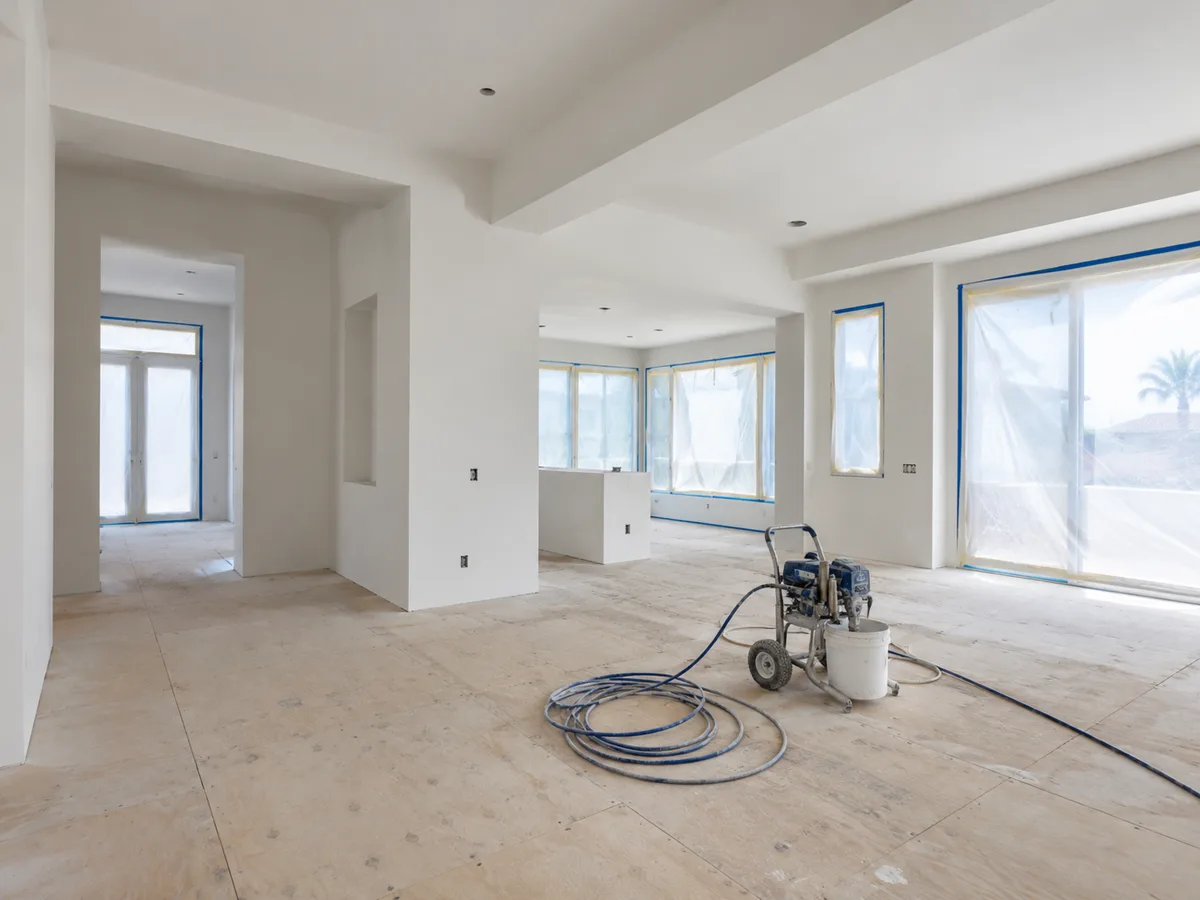
Nail and anchor holes are filled, dents and torn drywall paper are repaired and sanded flush, and failed caulk at baseboards and tubs is cut out and replaced.

Torrance Expert Painting is a trusted Los Angeles County crew for unit turn painting in Torrance, CA, working with on-site property managers and specializing in vacant make-ready repainting, touch-up turns and one written color and sheen schedule per property. We offer per-unit pricing by unit type and patch-and-paint drywall packages.
Our team provides stain-blocking primer over water marks and smoke film, delivering rent-ready rooms that match the last turn for both residential and commercial projects. We write the schedule your units follow, and the crew that walks a vacant unit with your manager is the crew that paints it and clears its punch list at the walkthrough.
From filling anchor holes and sealing a smoke-stained ceiling to the final room-by-room check, our team handles every detail. Serving Torrance, Redondo Beach, Manhattan Beach and El Segundo, we book from your move-out list so each vacant unit is painted and handed back for cleaning and leasing.
Why Torrance Expert Painting
No salesperson hands you to a stranger. The person who measures the job answers for it.
Unit turn painting in Torrance means painting a vacant apartment between residents, so the next lease starts in a unit that looks like the model. It is interior and vacant only: walls, ceilings, doors, door frames, baseboards and closets, plus the kitchen and bath walls where moisture and grease collect.
Nail and anchor holes are filled, dents and torn drywall paper are repaired and sanded flush, and failed caulk at baseboards and tubs is cut out and replaced.
Water marks, crayon, nicotine and smoke film are sealed with a stain-blocking primer first, because finish paint alone lets them bleed back through.
Grease is cleaned off before paint so the coat bonds, mildew is treated, and damp rooms get the finish the schedule names for them.
Scuffed doors, frames and baseboards get the enamel from the property's schedule, so the trim matches the units on either side.
One written color and sheen schedule for the whole property makes touch-ups invisible later. The schedule names the product, the color and the sheen for each surface: walls, ceilings, doors and trim, bathrooms and any accent wall the owner allows. When every turn follows it, a touch-up next year disappears into this year's paint instead of showing as a patch of a slightly different white.
If the property has no schedule, we build one at the first walk from what is already on the walls, matching the dominant colors and recording the sheens, and the manager approves it before the first unit is painted. Paint is ordered to the schedule every time, and a color change by the owner is written into it, so the new color starts on a known unit and spreads turn by turn rather than appearing at random.
Deciding between a touch-up and a full repaint is the main cost lever on a turn, and it is made at the walk with the manager, room by room. A unit whose walls are clean apart from a few holes and scuffs is patched and touched up in the scheduled paint. A unit with smoke film, a resident's dark accent color, marks across most walls or a scheme change gets a full repaint of the affected rooms or the whole unit.
The decision has a second side in California. Civil Code section 1950.5 lets a landlord deduct from a security deposit only for damage beyond ordinary wear and tear, and never for the cumulative effects of ordinary wear across one or more tenancies. When deductions for repairs and cleaning go past $125, the statute has the landlord send copies of the contractor's bill or invoice with the itemized statement, and since April 1, 2025 the landlord also photographs the unit after it is returned and again after the repairs.
So each unit's invoice from us lists routine repainting and damage repair as separate lines, room by room, which keeps the paperwork owed to a former resident straightforward. What gets deducted is the landlord's call, not ours.
Unit turn painting in Torrance is typically estimated at roughly $300 to $900 per unit, a budgetary range from our painting ticket bank; your price sheet replaces it once we have walked your unit types. A unit turn is priced by unit type and condition so a manager knows the cost before the move-out, not when the invoice arrives.
The price sheet is an estimate tied to the conditions we saw, and it can change when a unit comes back in worse shape than its type assumes; the written quote for that unit, or the agreed price sheet, sets what you pay. Send the unit mix and your recent move-out volume, and we will return a per-unit price sheet for the property.
Paint sits in the middle of a make-ready, and putting it in the right place saves a second trip. Maintenance repairs, such as a rehung door, a replaced outlet cover or a new cabinet hinge, go first so nobody is touching up behind them. Paint follows, then flooring and carpet cleaning, then the final clean, so drips and dust from the paint work leave with everything else.
The unit is empty but the ones beside it are not, so materials stay inside the unit, nothing is left in shared hallways or stairs, and any spraying stays within the vacant rooms with doors and vents masked.
When a turn also needs flooring, appliances or counter work, the manager decides the order of trades, and marks those trades leave after the paint is finished go on the punch list instead of being ignored.
Closet interiors, the backs of doors and the shelf edges a prospect opens during a showing are painted in the schedule finish, because a missed closet is the first thing a careful renter notices.
Turns arrive whenever residents move out, so the work is set up to repeat without a fresh negotiation each time. The manager sends the unit number, the move-out date and the access arrangement, the turn is booked against the price sheet, and the start date and expected finish for that unit are confirmed in writing when it is booked.
Pre-1978 buildings add one step. The federal RRP rule applies to paid work that disturbs painted surfaces in housing built before 1978, so in an older Torrance building any sanding or scraping on a turn is preceded by a test, with containment and HEPA cleanup wherever lead turns up.
The process
Four steps, and nothing is painted until you have approved the scope and the colors.
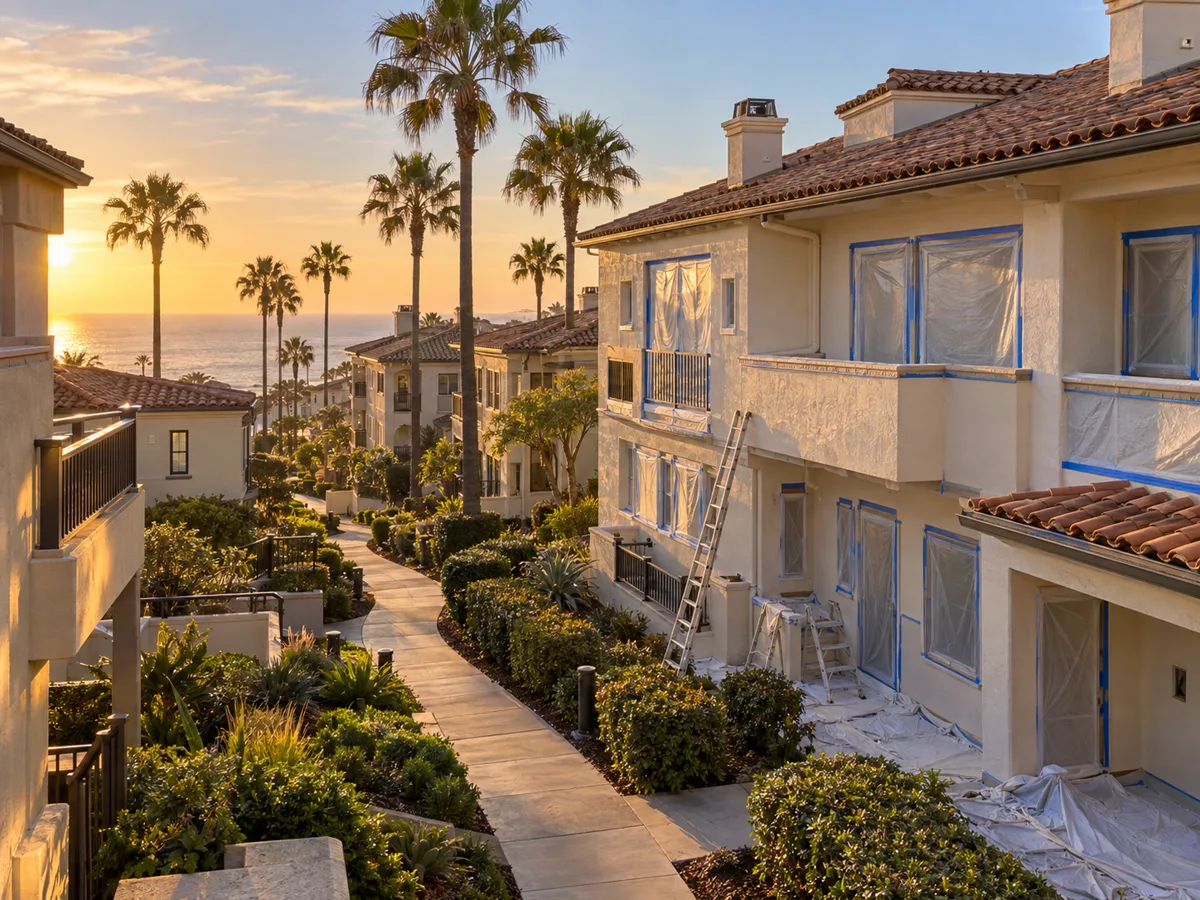
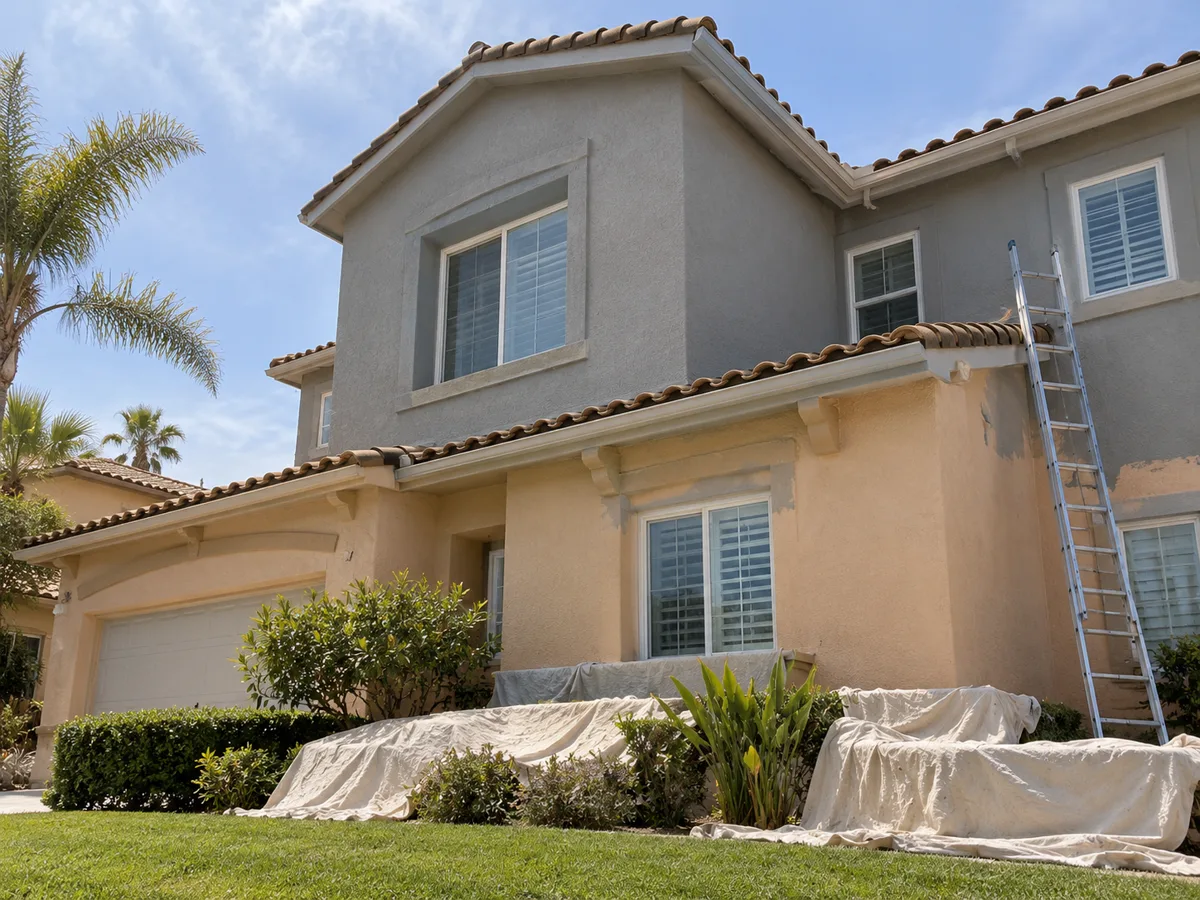
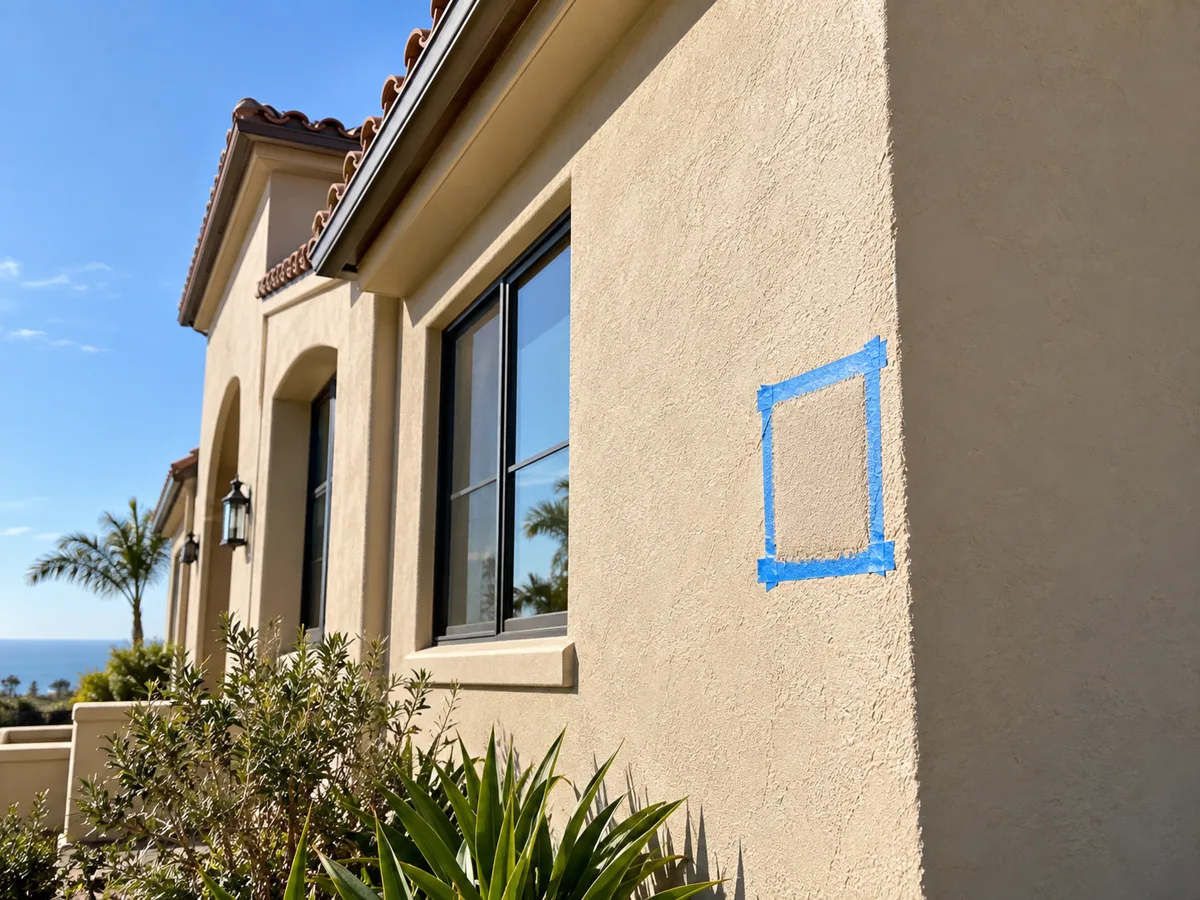
We walk the house or property with you, look at the stucco, the trim and the old coating, and note what the sun, the salt air and the marine layer have done to each side.
You get the prep, the products, the colors and the dates in writing. For an association or a building, the scope is phased so residents and tenants know which day is theirs.
Washing, scraping, patching and caulking come first, because that is what the paint holds on to. Then primer where it is needed and the finish coats.
We walk it again with you before we call it done, and touch up anything you point at.
Also from our crews
Questions
Yes. After a walk of each unit type you get a price sheet by type and scope, and a unit that comes back in worse condition than its type assumes is quoted on its own in writing before work starts.
No. This service is for vacant units between residents, when every room can be cleared and reached. Exterior repaints of occupied buildings are planned and bid as a separate project.
We match the colors on the walls at the first walk, record the products and sheens, and give the manager a written schedule to approve. From then on every turn uses it.
It is primed first so the scheduled color covers in the normal number of finish coats, and the extra primer shows on that unit's invoice as its own line.
Yes. Each unit's invoice lists routine repainting and damage repair separately, room by room. Whether any of it is charged to a former resident is the landlord's decision under Civil Code section 1950.5.
Small holes, dents and torn paper are part of the patch-and-paint scope. A larger repair, such as a damaged section of wall, is priced as an adder at the walk.
As much as the move-out list gives you. The unit number, move-out date and access details are enough to book, and the confirmed start date goes back to the manager in writing.
Cabinet faces are not part of a standard turn. If the manager wants worn cabinet doors painted, they are quoted per kitchen as an adder and listed separately on that unit's invoice.
A completion note for the unit listing the rooms painted, the schedule products used and any adders, along with the invoice that splits routine repainting from damage repair.
Homeowners get a free on-site estimate. Boards, managers and contractors can send a scope for a bid.
Licensed, insured and bonded · License #585047. Calls only, we do not receive text messages.