Skip to content
Call (424) 435-0964Licensed, insured and bonded · License #585047

Limewash, Roman Clay and Venetian Plaster in Torrance

Torrance Expert Painting is a trusted Los Angeles County specialist for limewash and Venetian plaster in Torrance, CA, specializing in brushed limewash, troweled Roman clay, and burnished polished plaster. We offer marmorino and tinted lime finishes.

  • Free on-site estimate
  • Written scope, coat by coat
  • Colors you approve first

Get a free painting estimate

Or call (424) 435-0964. Calls only, we do not receive text messages.

About our limewash, roman clay & Venetian plaster

Our team provides mineral finishes alongside conventional painting, delivering walls with depth and movement for homes and designer-led spaces for both residential and commercial projects. Before any wall is finished we sample each finish on a board in your room, and our written scope names the base coat, the primer and the number of layers, because a hand-applied finish changes more from wall to wall than painting does.

From damping down a bare stucco wall before the first wash of lime to the last coat of wax on a burnished plaster, our team handles every detail. Serving Torrance, Hermosa Beach, Manhattan Beach and Rolling Hills Estates, we fit the work around a designer's schedule as easily as a homeowner's.

Why Torrance Expert Painting

How We Work

No salesperson hands you to a stranger. The person who measures the job answers for it.

Written scopePrep, primer and finish coats listed surface by surface
Colors firstSamples on your wall, and association submittals prepared for review
One crewThe crew that quotes the job is the crew that paints it
CA License #585047Licensed, insured and bonded

Limewash, Roman clay and Venetian plaster

These are three different materials with three different looks, and choosing between them is the first decision. None of them is ordinary latex paint, and each one is applied by hand.

Limewash

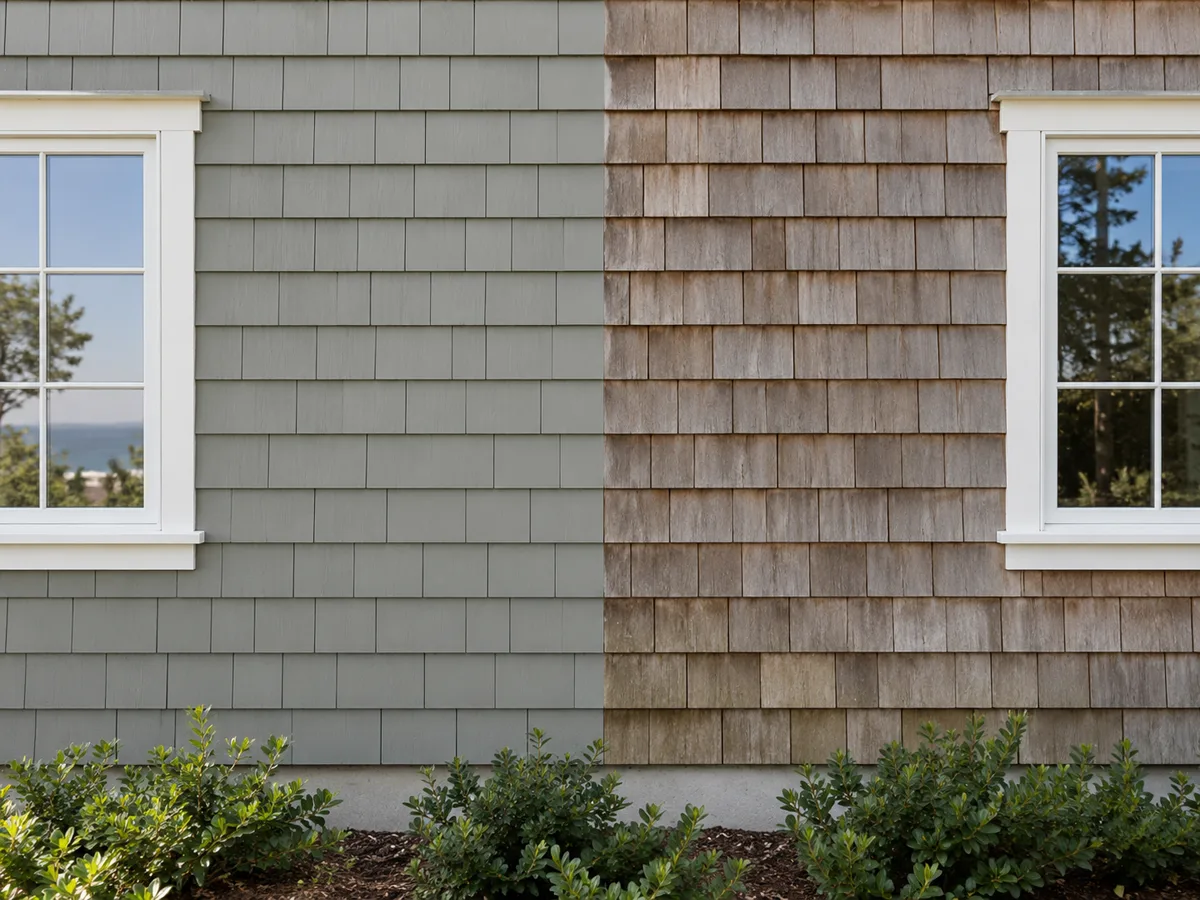
Limewash is slaked lime in water, brushed on in thin coats. It cures by reacting with carbon dioxide in the air to form calcite, and the calcite crystals give it a soft glow that a film paint does not have. The look is very flat and mottled, and the brush pattern is part of the finish.

Roman clay

Roman clay is a clay-based decorative coating laid on with a flexible putty knife or trowel. It is smooth to the touch with a mottled, marble-like look that is quieter than Venetian plaster, and it can be left at a very low sheen or given a protective topcoat.

Venetian plaster

Venetian plaster is a lime plaster carrying marble dust, applied in thin layers with a trowel and then burnished. Fully burnished, it becomes a hard, polished, marble-like wall with an illusion of depth; left unburnished, it stays matte and stone-like but is brittle and marks easily. A wax layer seals it.

At a glance

Look: limewash is flat and cloudy, Roman clay is soft and mottled, Venetian plaster can be polished to a sheen. Tool: a wide masonry brush for limewash, a putty knife or trowel for Roman clay, a steel trowel for Venetian plaster. Where: limewash inside and out, Roman clay on smooth interior walls, Venetian plaster mainly on interior walls and ceilings.

Where mineral finishes work

Lime finishes breathe, which suits masonry and stucco but changes how a wall is prepared. Lime plaster is permeable and lets moisture diffuse and evaporate, and limewash is drawn into a mineral surface instead of sitting on top the way a modern paint does. That is why it bonds best to bare brick, stone, block and stucco, and why a wall already coated in acrylic, or bare drywall, gets a mineral primer first.

Exterior stucco and block walls

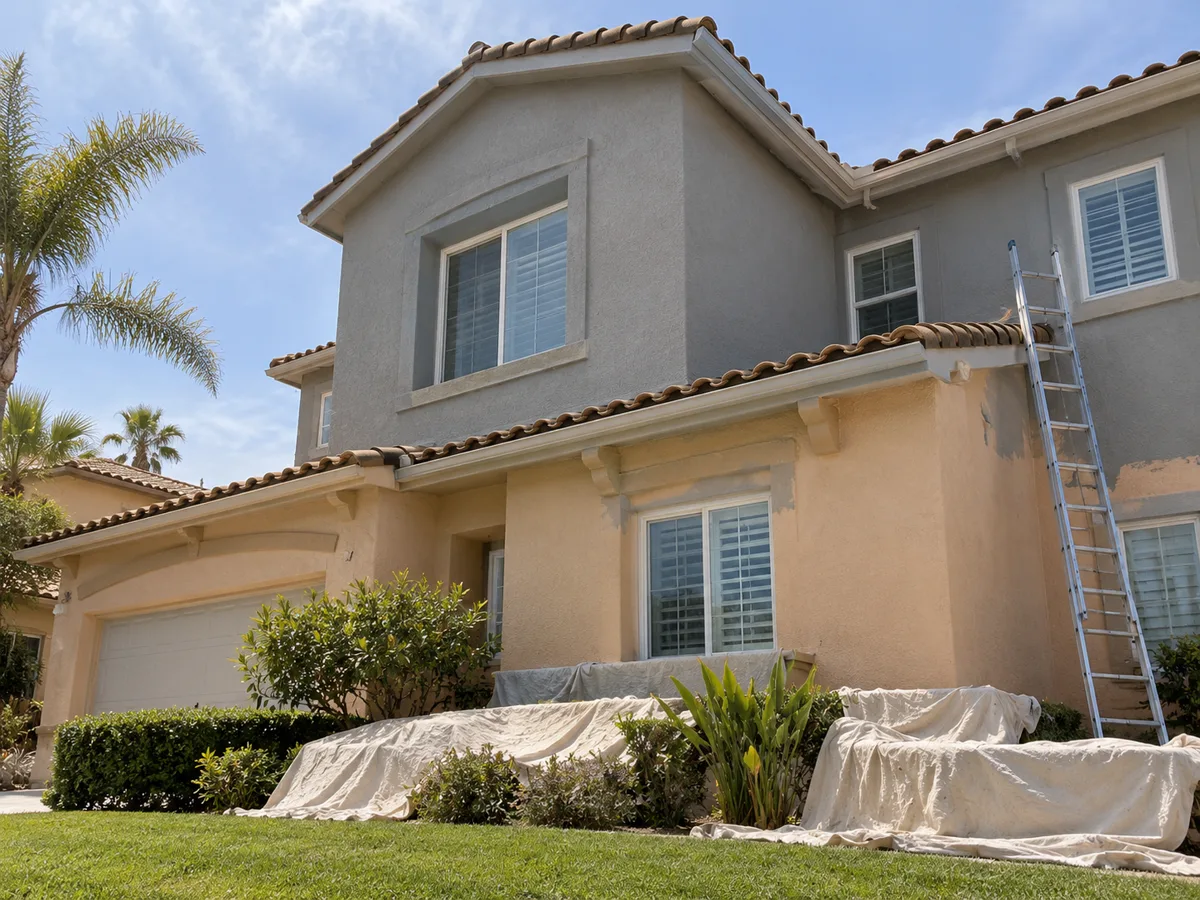
Old Torrance has stucco and Mission-style detail from its earliest buildings, and lime on bare stucco has deep roots in California: the historic missions were commonly whitewashed, which gave them their bright white look. The high pH of lime also acts against mold, a useful trait on a north wall that stays shaded.

Interior walls and ceilings

Inside, Roman clay and Venetian plaster go on smooth drywall or plaster over a primer and a base coat. Venetian plaster earns its place where real marble would be hard or too costly to install, such as columns, corbels and curved walls.

Wet areas

Showers and baths call for a waterproof lime finish such as tadelakt, a Moroccan lime plaster that is polished and treated with soap so it sheds water. Plain limewash is not a shower finish, and we say so at the walk.

Samples and approval

Hand-applied finishes vary from wall to wall, so a sample board made on site is the approval step. Lime has very low opacity when it first goes on and becomes more opaque as it dries and cures, which means a wet sample tells you almost nothing about the finished color.

  • Sample boards are made in your room with the same base coat, primer and layers the real wall will get.
  • Each board is left to dry fully before you judge it in morning and evening light.
  • The approved board stays on site as the reference the crew works to.
  • Tint, sheen and how much movement you want are written into the scope from the board you sign.

Two walls in one room will never be identical, and that variation is exactly why people choose these finishes. The board sets the range; it does not promise a photocopy.

How a mineral finish is applied by hand

Walk and measure

We measure each wall, note the substrate, whether bare stucco, painted drywall or old plaster, and check for cracks or damp before recommending a finish.

Repair and prime

Cracks and holes are repaired first, and any non-mineral surface gets the mineral primer the product calls for.

Damp down, then wash

For limewash on bare masonry the wall is dampened before each coat so the lime is drawn in evenly: a wall left dry can leave the lime powdery on the surface, and a saturated one can make the wash fail.

Trowel and burnish

Roman clay and Venetian plaster go on in thin troweled layers, and Venetian plaster is then burnished with a steel trowel to bring up its depth and sheen.

Seal and hand over

Wax or topcoat goes on where the scope calls for it, and we walk every finished wall with you beside the approved sample board.

What decorative finishes cost

Decorative mineral finishes in Torrance are typically estimated at roughly $4 to $25 per square foot, with limewash at the low end and burnished Venetian plaster at the top.

Limewash and mineral washes are usually estimated at about $4 to $12 per square foot, while Roman clay and Venetian plaster typically run roughly $8 to $25 per square foot because every layer is troweled by hand.

  • Square footage, ceiling height and whether a stairwell or tall entry needs scaffold.
  • The substrate: bare masonry takes lime directly, while painted walls and drywall need a mineral primer.
  • Repairs to drywall, plaster or stucco before the first coat.
  • The number of layers and how far a Venetian finish is burnished.
  • Wax or topcoat on kitchen, bath and high-touch walls.
  • Detail work such as arches, niches, columns and curved walls.

Figures here are planning estimates and subject to change; the written quote, prepared after we see the walls and you approve a sample board, sets the final price.

Care and touch-up

Mineral finishes age differently from paint, and the care advice comes with the handover.

Limewash

A little limewash can rub off onto clothing, so a hallway or a wall beside a sofa is a place to think about before you choose it. Touch-up uses the same lime and the same tint recorded on your job sheet.

Roman clay and Venetian plaster

A topcoat adds protection to Roman clay, and Venetian plaster under a wax sealant can be made waterproof. We leave labeled leftover material with the tint formula written down, so a later repair blends with the same product.

For designers and commercial interiors

Interior designers, restaurant owners and office tenants who want a plaster feature wall can send drawings and square footage for a written proposal, and the same sample board approval applies to them.

Colors and Finishes

The process

How a Painting Job Runs

Four steps, and nothing is painted until you have approved the scope and the colors.

  1. The walk

    We walk the house or property with you, look at the stucco, the trim and the old coating, and note what the sun, the salt air and the marine layer have done to each side.

  2. The written scope

    You get the prep, the products, the colors and the dates in writing. For an association or a building, the scope is phased so residents and tenants know which day is theirs.

  3. Prep, then paint

    Washing, scraping, patching and caulking come first, because that is what the paint holds on to. Then primer where it is needed and the finish coats.

  4. The final walk

    We walk it again with you before we call it done, and touch up anything you point at.

Questions

Limewash, Roman Clay & Venetian Plaster: Common Questions

Who does limewash and Venetian plaster in Torrance?

Torrance Expert Painting applies limewash, Roman clay and Venetian plaster in Torrance homes and across the South Bay, with every finish sampled on a board in your room before work starts. The walk and the written estimate are free.

What is the difference between limewash and Roman clay?

Limewash is slaked lime in water brushed on thin, giving a flat, cloudy wash. Roman clay is a thicker clay-based coating troweled on for a smooth, marble-like surface, so one is a wash and the other behaves more like a plaster.

Can limewash go over painted walls?

Yes, with a mineral primer first. Lime works by being drawn into a mineral surface, so over acrylic paint or bare drywall the manufacturer calls for a primer coat before the lime goes on.

Can you limewash an exterior stucco or block wall?

Yes. Bare stucco, brick and block suit lime best, because they let it soak in and let moisture back out. A wall already coated in acrylic or elastomeric paint is looked at first, since that film decides how the lime behaves.

Is Venetian plaster durable?

Fully burnished and waxed Venetian plaster is hard and smooth. Left unburnished it is brittle and marks more easily, which is why the finish level is agreed on the sample board before any wall is started.

Can I use these finishes in a bathroom?

Venetian plaster sealed with wax can be made waterproof, and tadelakt, a soap-polished lime plaster, is the traditional finish for baths and showers. Plain limewash does not belong in a wet area.

How long does a lime finish take to dry?

It depends on the product, the number of layers and the weather, and lime keeps hardening as it cures. The product data sheet sets the recoat guidance, and the length of the job is written on your estimate.

Do you work with interior designers?

Yes. A designer can send drawings, finish references and square footage, and we return sample boards for approval and a written proposal for the walls in the plan.

Free on-site estimate

Talk to us about limewash, roman clay & Venetian plaster

Homeowners get a free on-site estimate. Boards, managers and contractors can send a scope for a bid.

Call (424) 435-0964

Licensed, insured and bonded · License #585047. Calls only, we do not receive text messages.

Call (424) 435-0964Licensed, insured and bonded · License #585047