Skip to content
Call (424) 435-0964Licensed, insured and bonded · License #585047

Epoxy and Polyaspartic Garage Floor Coating in Torrance

Torrance Expert Painting is a trusted Los Angeles County specialist in garage floor coating in Torrance, CA, specializing in epoxy flake floors, polyaspartic topcoats and concrete floor painting done as a full coating system. We offer slab moisture testing and diamond grinding.

  • Free on-site estimate
  • Written scope, coat by coat
  • Colors you approve first

Get a free painting estimate

Or call (424) 435-0964. Calls only, we do not receive text messages.

About our epoxy & polyaspartic garage floor coating

Our team provides crack and joint repair before the base coat, delivering a floor that keeps its bond where hot tires park, for both residential and commercial projects. We test the slab for moisture before we quote a system, and the written scope names the prep, the base coat, the flake and the topcoat our painting crew will lay down.

From grinding the slab to an open profile to the last pass of clear topcoat over the flake, our team handles every detail. Serving Torrance, Rossmoor, El Segundo and Manhattan Beach, we coat attached and detached garages and leave a floor you can hose clean.

Why Torrance Expert Painting

How We Work

No salesperson hands you to a stranger. The person who measures the job answers for it.

Written scopePrep, primer and finish coats listed surface by surface
Colors firstSamples on your wall, and association submittals prepared for review
One crewThe crew that quotes the job is the crew that paints it
CA License #585047Licensed, insured and bonded

Epoxy or polyaspartic

Garage floor coating in Torrance usually comes down to two chemistries, epoxy and polyaspartic, and they differ most in how fast they cure and how well they stand up to sunlight. Many systems use both: an epoxy base for build and bond, and a polyaspartic topcoat for wear and color stability.

Epoxy

Epoxy is a two-part resin cured with a hardener, and it is widely used for chip and colored-aggregate floors. It builds a thick, hard layer and bonds well to properly prepared concrete. Its weak point is sunlight: epoxy tends to chalk under UV exposure and yellow over time, which matters on a garage that stands open to the driveway all afternoon.

Polyaspartic

Polyaspartic is a modified polyurea. Coatings made with aliphatic isocyanates are UV and light stable with a low tendency to yellow, and the chemistry lets the cure rate be tuned, so it can be rolled on and still cure fast. On concrete it goes down clear or pigmented, with quartz or vinyl paint chips broadcast into it.

Which one we recommend

For a garage that opens to sun, a polyaspartic topcoat is usually worth it. For a shaded or closed garage on a tighter budget, a well-prepared epoxy system with a clear topcoat can be the better value. The product data sheets for the system we recommend come with the estimate, along with the reason for the choice.

Testing and grinding the slab

A coating fails when moisture comes up through the slab, so we test the concrete before we recommend anything. ASTM International notes that excess moisture in a floor slab can cause coatings to debond and deteriorate, and that coating manufacturers generally require moisture testing before installation on concrete.

  • Moisture testing uses an established method, such as the calcium chloride test of ASTM F1869 or the in-slab relative humidity probe of ASTM F2170. Either result describes the slab at the time and place tested, so we test more than one spot on a large floor.
  • If a slab tests high, we tell you, and the options are a moisture-tolerant primer system or a different floor, not a coating that will lift.
  • Grinding is our default prep. A diamond grinder removes the smooth top layer and opens the concrete to a profile like coarse sandpaper, which gives the base coat something to grip.
  • Acid etching is not our default. It can open the surface, but it does not remove glue, caulk or mastic, and the residue it leaves can clog the pores if it is not fully rinsed, which is a known cause of coating failure.

Much of the housing Torrance built between 1955 and 1965 was ranch homes with attached garages, so many of these slabs are now decades old, often with oil stains, old paint and patched cracks that grinding reveals and testing has to account for.

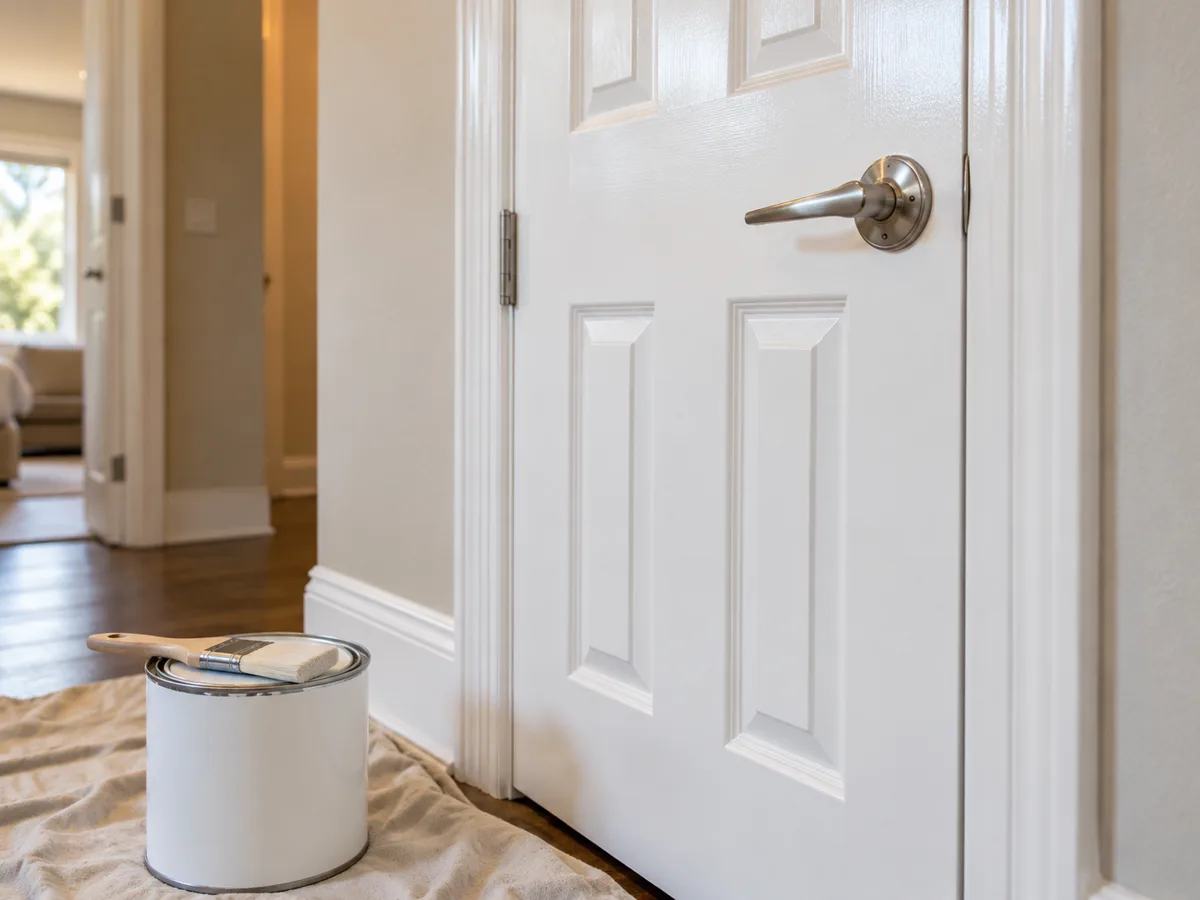
Freshly painted white six-panel interior door and casing with a lever handle, a paint can with a brush across its lid on a drop cloth at the base.

Flake, color and topcoat

A flake floor is built in layers: a pigmented base coat, a broadcast of vinyl chips while the base is still wet, scraping of the loose chips once it has set, and one or more clear topcoats over the top. The flake hides small imperfections in old concrete and adds grip underfoot.

  • Broadcast density runs from a light scatter, where the base color shows through, to full broadcast, where the chips cover the whole floor.
  • Base color and chip blend are chosen from physical samples, laid on your own slab where the light is the same.
  • The clear topcoat carries the wear. Its thickness and chemistry are named on the estimate, since that layer is what tires and tools touch.
  • Stem walls, the short concrete curb along the garage walls, can be coated to match so the floor reads as one surface.

Hot tire pickup is the failure people fear most. Heat and plasticizers from a hot tire can soften a coating and pull it off the concrete, and manufacturers trace it mainly to poor surface preparation or the wrong system. Grinding, a moisture test and a topcoat specified for vehicle traffic are how we keep it from happening.

What a garage floor coating costs

Coating a residential garage floor in Torrance is typically estimated at roughly $1,500 to $6,000, with the size of the garage, the slab's condition and the chosen system moving it most. That range comes from our service pricing for this work and is a planning figure.

  • Square footage: a one-car, two-car or three-car garage.
  • Moisture test result, and whether a moisture-tolerant primer is needed.
  • Removing an old paint or coating before grinding.
  • Crack, spall and joint repair.
  • Epoxy topcoat versus polyaspartic topcoat, and flake density.
  • Stem walls and steps.
  • Emptying the garage, if you would like us to move shelving and storage.

All of these numbers are estimates and can change once the slab is tested and measured. The written quote you get after the walk sets the final price.

Cracks, joints and old coatings

Cracks are filled and ground flush before coating, and control joints are either filled or honored, depending on whether the slab is still moving. A coating cannot stop a slab from cracking; it can only bridge a crack that has stopped moving. Ground slabs on clay soils are especially prone to cracking, and isolation joints exist to let slabs move, so a joint that is working is left as a joint rather than filled solid.

  • Old paint or a failing earlier coating is ground off completely. A new system over an old one that is losing its bond fails along with it.
  • Oil stains are degreased and ground out, because oil in the pores blocks the bond.
  • Spalled spots at the garage door threshold are patched, since that edge takes water and tire traffic at the same time.

On houses built before 1978, old paint on garage walls or stem walls is treated as lead until tested, and it is prepared with lead-safe practices.

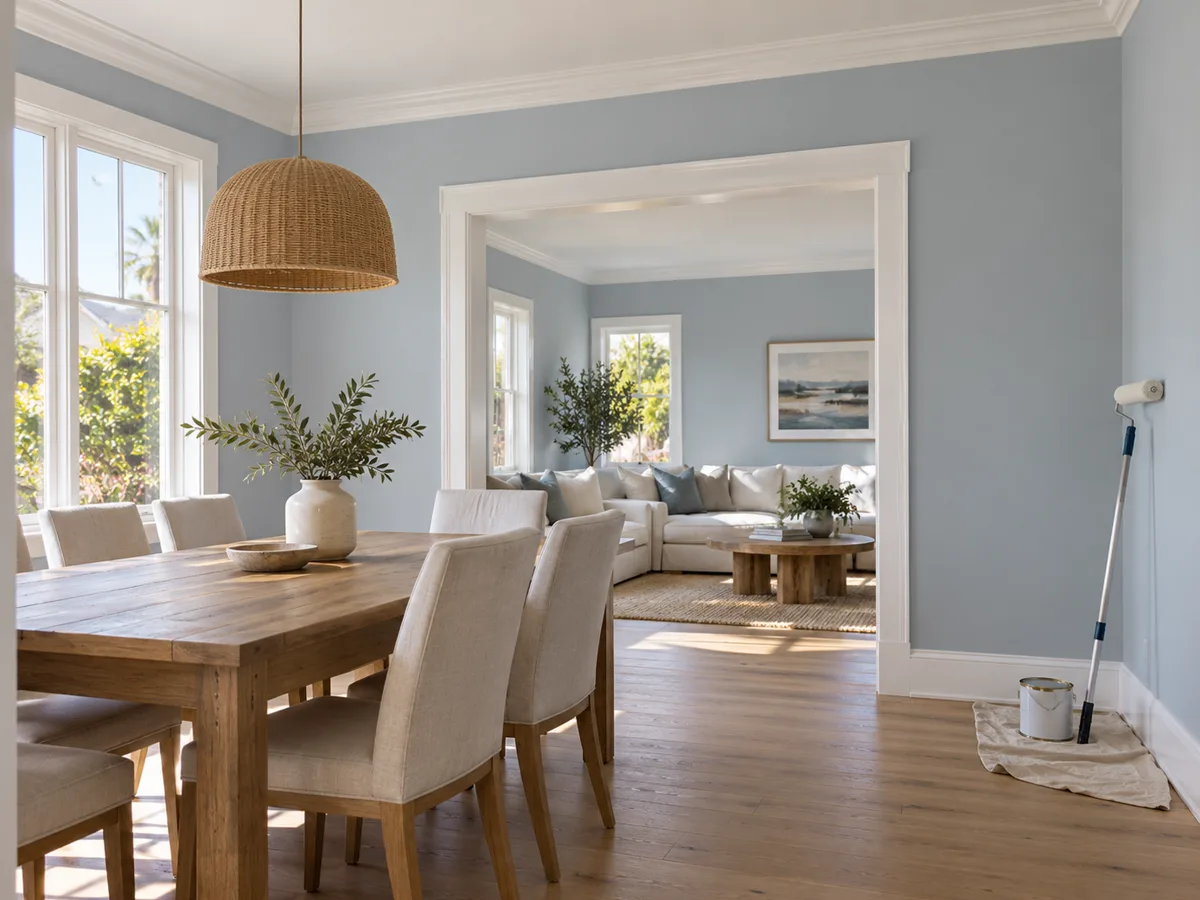
Dining and living room with soft blue-grey walls, white trim and crown moulding, a wood dining table under a woven pendant, and a roller on an extension pole beside a paint can in the corner.

Scheduling your garage floor

A garage floor job starts with a free walk, a moisture test and a written estimate that names the prep, the system, the colors and the topcoat. The start date and how long the garage will be out of use are written on that estimate, since both follow the product data sheet and the test result rather than a fixed number.

Associations and apartment owners with rows of private garages, and owners of workshops and storage buildings, get the same testing and a scope written per garage or per building. Call or use the form to book a walk and slab test.

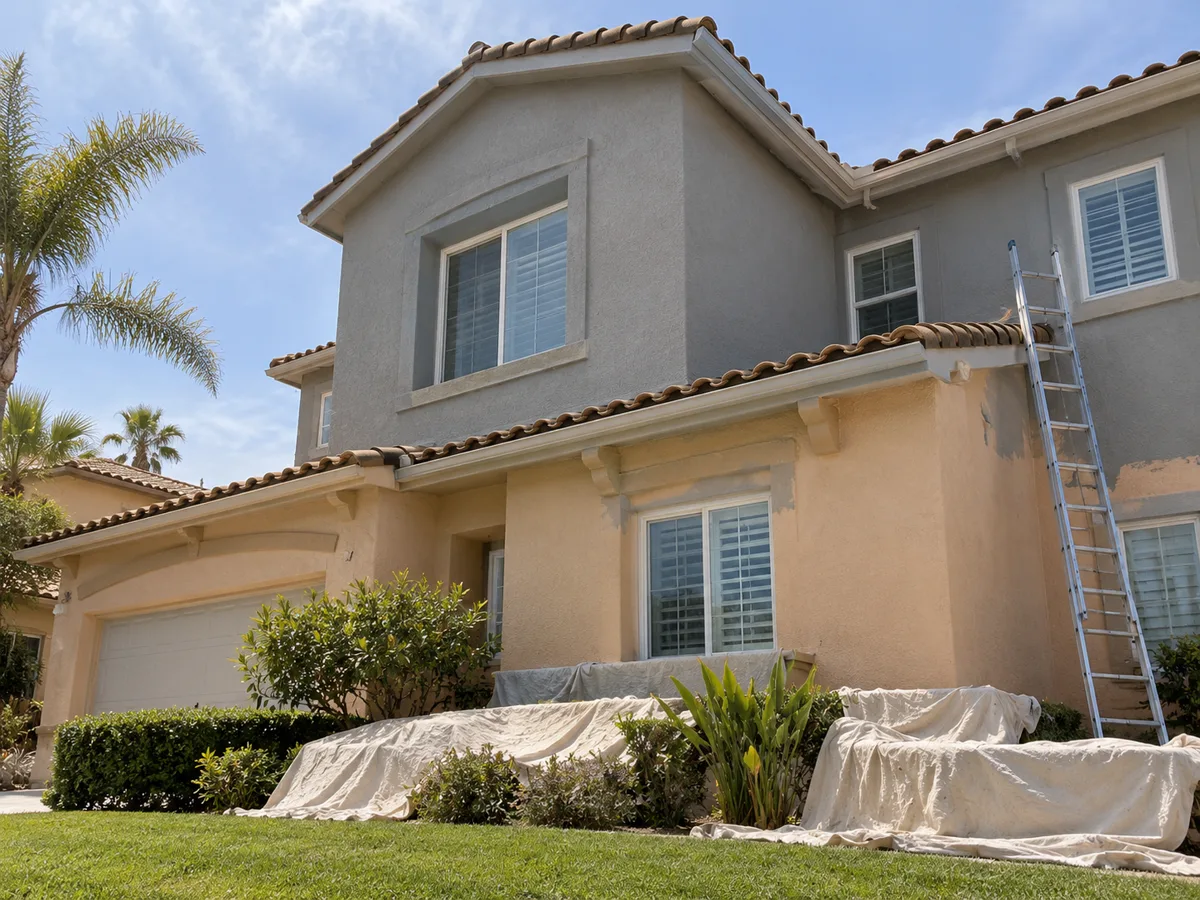
Two-story stucco house mid-repaint, the upper storey fresh warm grey and the lower storey still faded peach, an aluminium extension ladder against the wall and drop cloths over the shrubs.

Colors and Finishes

The process

How a Painting Job Runs

Four steps, and nothing is painted until you have approved the scope and the colors.

  1. The walk

    We walk the house or property with you, look at the stucco, the trim and the old coating, and note what the sun, the salt air and the marine layer have done to each side.

  2. The written scope

    You get the prep, the products, the colors and the dates in writing. For an association or a building, the scope is phased so residents and tenants know which day is theirs.

  3. Prep, then paint

    Washing, scraping, patching and caulking come first, because that is what the paint holds on to. Then primer where it is needed and the finish coats.

  4. The final walk

    We walk it again with you before we call it done, and touch up anything you point at.

Questions

Epoxy & Polyaspartic Garage Floor Coating: Common Questions

Epoxy or polyaspartic: what should go on my Torrance garage floor?

If the garage door stays open to the sun, a polyaspartic topcoat holds its color better, because epoxy chalks and yellows under UV. Many floors use an epoxy base with a polyaspartic topcoat to get the strengths of both.

Why do you test the slab for moisture first?

Moisture rising through the concrete is a leading reason coatings blister and lift. A test tells us whether a standard system will bond or whether the slab needs a moisture-tolerant primer, before you spend money on either.

Do you grind the concrete or acid etch it?

We grind. A diamond grinder opens the surface to a consistent profile and removes old residues that acid will not touch, and it leaves no acid film behind to interfere with the bond.

Will hot tires lift the coating?

They can on a floor that was poorly prepared or coated with the wrong product. Proper grinding, a moisture test and a topcoat rated for vehicle traffic are what prevent it.

Can you coat over my old garage floor paint?

No. Old paint or a worn coating is ground off first, because a new system is only as strong as the layer underneath it.

Will the flake floor be slippery?

The broadcast flake gives the surface texture rather than a glassy finish. We bring a finished sample board so you can feel it underfoot before you choose the flake density and topcoat.

Can my garage floor cracks be fixed?

Cracks that have stopped moving are filled and ground flush before coating. Joints that are still working are left as joints, because filling them solid just moves the crack somewhere else.

How long will I be without my garage?

That depends on the system and the weather, and it follows the product data sheet. The exact time before you can walk on it and park on it is written on your estimate.

Free on-site estimate

Talk to us about epoxy & polyaspartic garage floor coating

Homeowners get a free on-site estimate. Boards, managers and contractors can send a scope for a bid.

Call (424) 435-0964

Licensed, insured and bonded · License #585047. Calls only, we do not receive text messages.

Call (424) 435-0964Licensed, insured and bonded · License #585047