The center owner
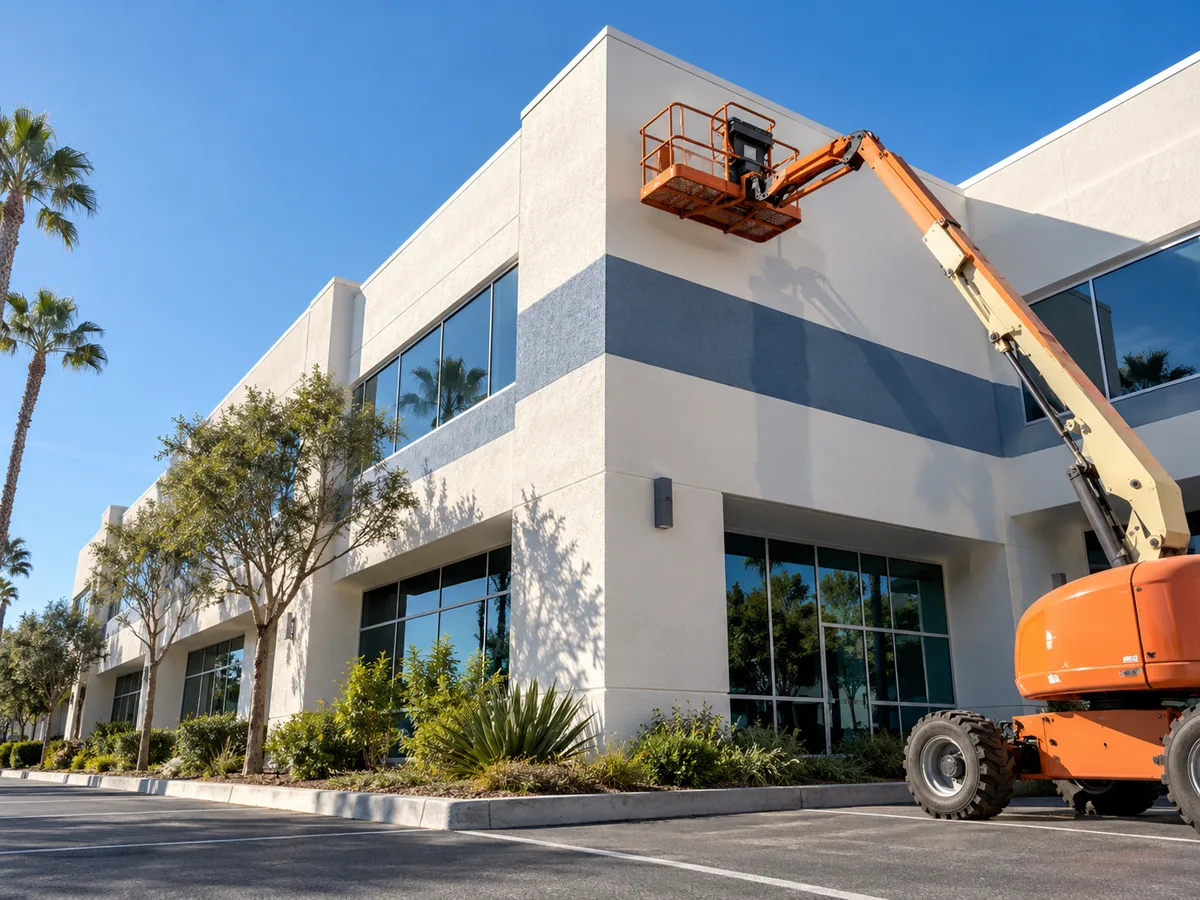
Elevations, parapets, columns, soffits, walkway ceilings, rear service walls and trash enclosures, painted to the center's color scheme and phased store by store so every business keeps an open entrance.

Torrance Expert Painting is a specialist Los Angeles County painter for retail and restaurant painting in Torrance, CA, specializing in storefront repaints, shopping center exterior painting and dining room and kitchen refinishing for center owners, retail tenants and restaurant groups. We offer after-close and pre-open schedules and brand color matching.
Our team provides cleanable kitchen and back-of-house coatings, delivering spaces that reopen on time and on brand for both residential and commercial projects. We paint a sample of your brand color for approval, submit product data to the center's manager when the lease requires it, and walk the punch list before doors open.
From masking channel letters on a sign band to repainting a whole center elevation, our team handles every detail. Serving Torrance, Manhattan Beach, Hermosa Beach and Redondo Beach, we keep the painting inside the hours your registers are closed.
Why Torrance Expert Painting
No salesperson hands you to a stranger. The person who measures the job answers for it.
Retail and restaurant painting in Torrance is scheduled after close or before open, so the schedule is the product as much as the paint is. A store that loses a Saturday to a repaint has paid for it twice.
The plan starts from your trading hours, then works backward. Each night has a fixed finish line: the last coat has to be on early enough for the room to be cleaned, the furniture set and the odor gone before staff arrive to open. When a room is too big for one night, it is split into sections, and the boundary between them is hidden at a corner or a column, never across an open wall where a lap line would show.
Merchandise, fixtures, booths and tables are covered or moved and put back exactly where they were. Food contact surfaces, cooking equipment and open food are never left exposed to the work.
A shopping center's exterior is usually the owner's scope, while the storefront, the interior and often the sign band belong to the tenant, so a bid for a center has to split them. Strip centers are typically developed as one unit with a row of stores facing a parking lot, which is why one paint job can touch many leases at once.
Elevations, parapets, columns, soffits, walkway ceilings, rear service walls and trash enclosures, painted to the center's color scheme and phased store by store so every business keeps an open entrance.
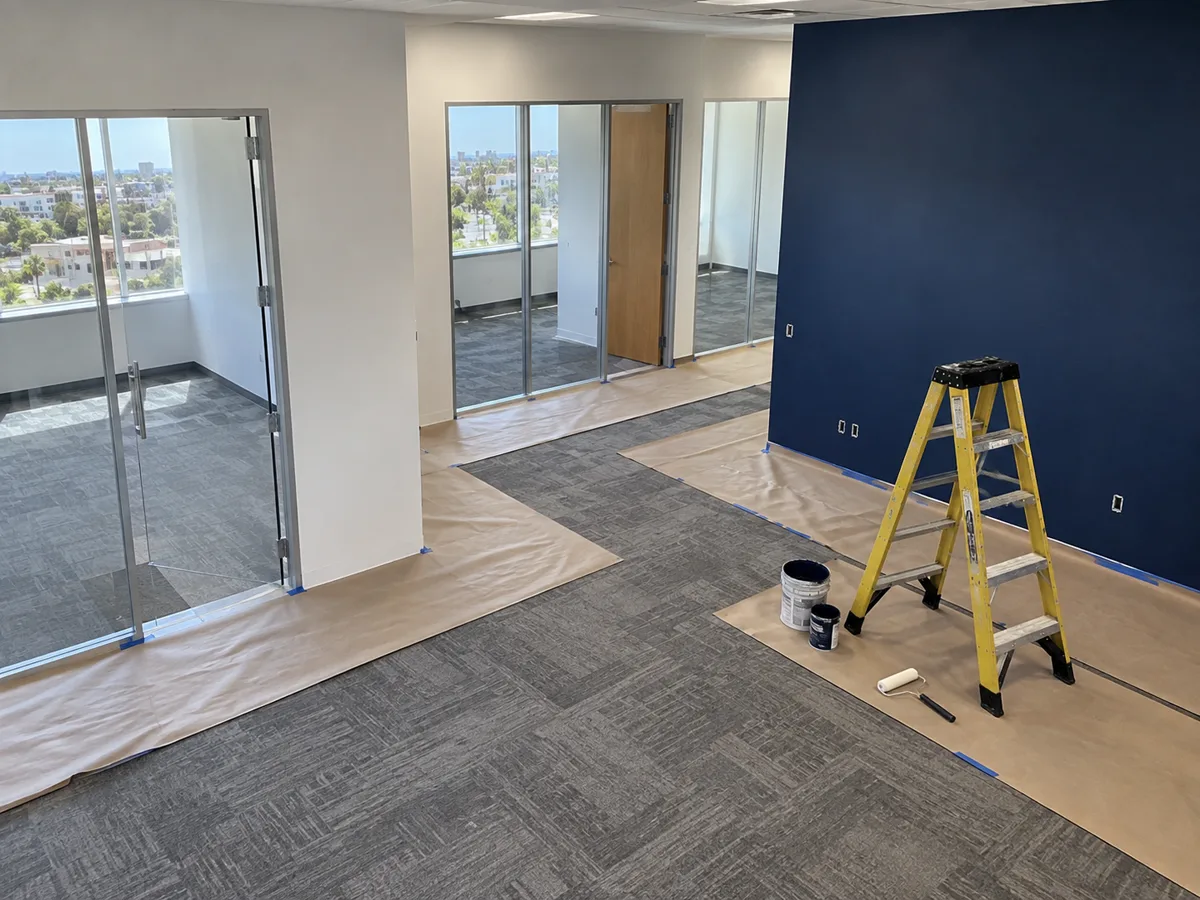
The storefront frame and doors where the lease assigns them, the interior walls and ceilings, and the brand colors that make a chain store look like every other location.
Storefronts often carry channel letters. The letters themselves belong to the sign company and are masked, not painted; the band behind them is painted in whichever scope the lease names. When both scopes are bid together, the bid shows them as separate line items with separate totals, so the owner and the tenant can each approve and pay for their own share. In a large regional mall, such as Del Amo Fashion Center, a three-level center co-owned and managed by Simon Property Group, interior storefront work also runs under the mall's own contractor rules; it is named here only as part of what Torrance holds, never as a client.
Restaurant kitchens and back-of-house need cleanable coatings that stand up to grease and steam, while dining rooms and storefronts are about color and wear.
California's Retail Food Code requires the walls and ceilings of food facility rooms to be durable, smooth, nonabsorbent and easily cleanable, and it exempts dining and sales areas from that rule. So a kitchen wall gets a hard, washable system, often an epoxy or a high-performance enamel chosen for chemical resistance, over walls degreased first because grease defeats adhesion. Your health inspector judges the result, and we choose the system from product data with that standard in mind.
Grease builds up inside hoods, ducts and fans and becomes a fire hazard, and that system is cleaned by hood cleaning contractors under NFPA 96, not painted. We paint the walls and ceilings around the hood line after it is cleaned, never the hood itself.
Walls take scuffing from chairs, booths and service carts, so a scrubbable matte or eggshell keeps the look soft while still wiping clean. Accent walls and brand colors are sampled on the wall under your own lighting before approval.
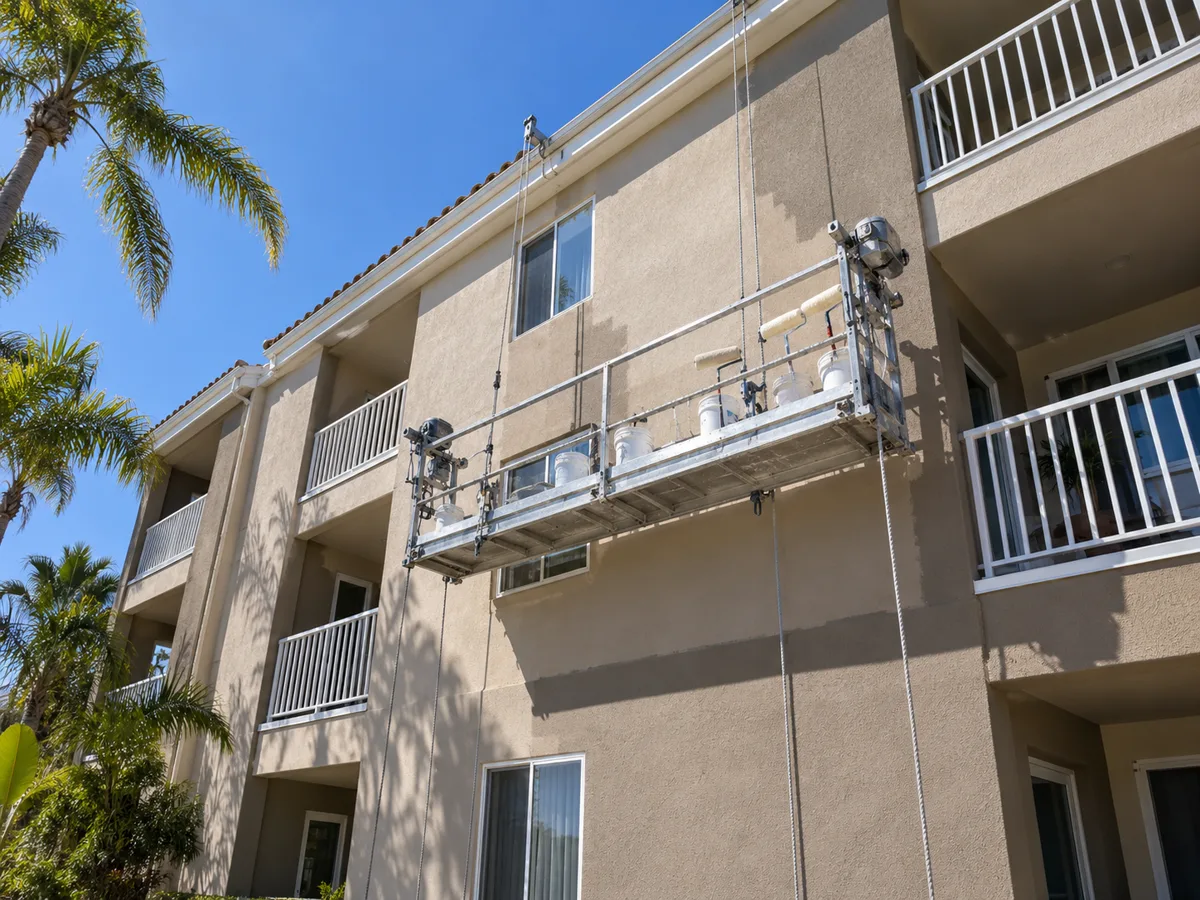
Stucco, block and metal elevations are washed, patched and primed where the surface is porous, then finished in the center's color, with door frames and railings in an enamel that handles hands and carts. Torrance has many Japanese restaurants and markets, and the US headquarters of Mitsuwa Marketplace and Nijiya Market are both in the city. They are named only as part of the city's food and retail fabric, never as clients.
Retail center and restaurant painting in Torrance is typically estimated at roughly $20,000 to $200,000 for a center or multi-site program, while a single restaurant's dining room and kitchen most often falls in an estimated band of about $10,000 to $60,000. Both are budgetary ranges for this work across the market, not quotes.
These are estimates and they will change with the hours, the surfaces and the system; the final price is set in the written bid after a walk of the store or center. Send the site plan, the list of storefronts or the restaurant count, and the hours you trade, and the bid comes back scheduled around them.
A retail or restaurant repaint runs in a short, fixed sequence, built so the business never loses a trading day.
We walk the space with the owner or manager, record surfaces and condition, and write down the trading hours, delivery times and any blackout dates such as a promotion or a holiday rush.
Brand colors are matched, painted as a sample under your lighting and approved, and where a center has a color standard the product data goes to its manager first.
Each shift covers, paints and cleans its own section, so the space is open for business at the agreed time every morning.
A final walk with the manager before doors open closes the punch list, and you keep a record of every product and color for future touch-ups, with the written warranty.

The process
Four steps, and nothing is painted until you have approved the scope and the colors.
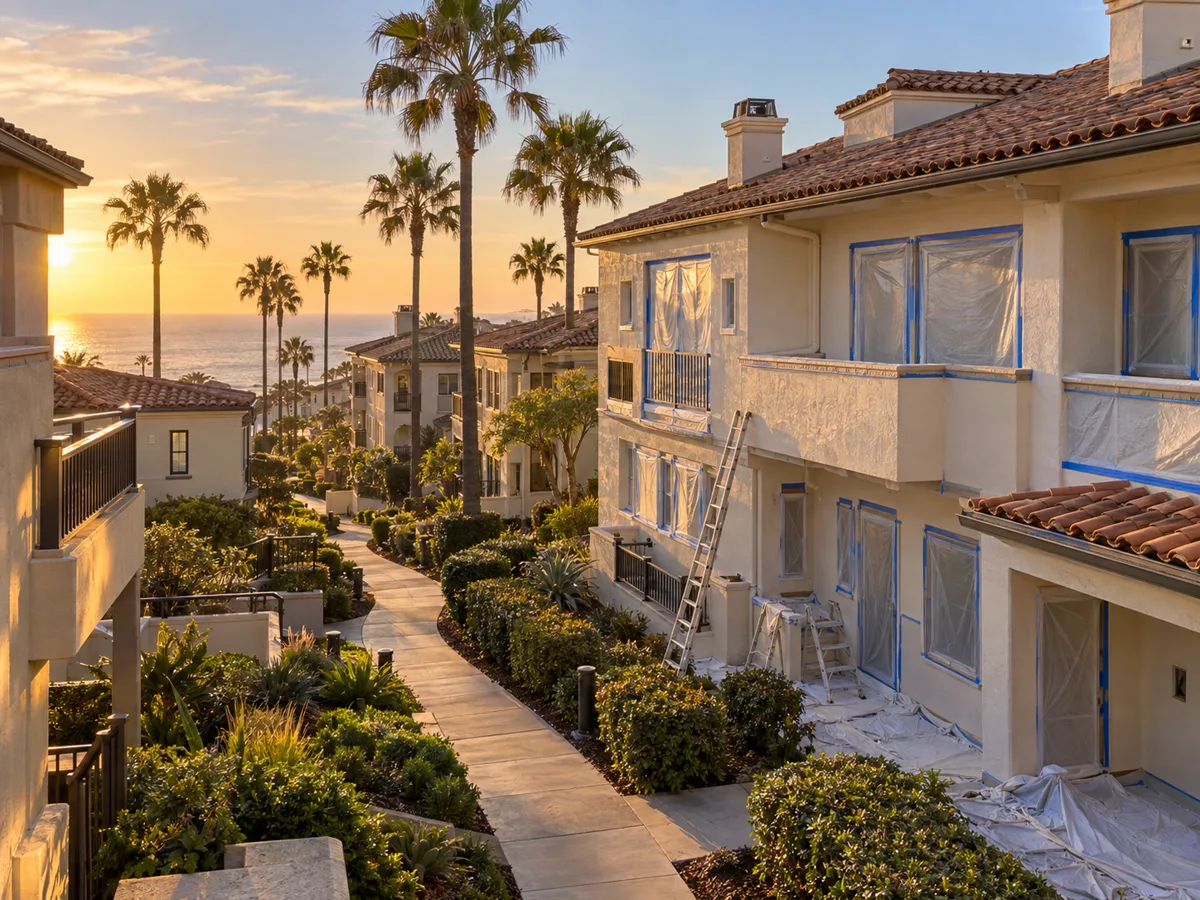
We walk the house or property with you, look at the stucco, the trim and the old coating, and note what the sun, the salt air and the marine layer have done to each side.
You get the prep, the products, the colors and the dates in writing. For an association or a building, the scope is phased so residents and tenants know which day is theirs.
Washing, scraping, patching and caulking come first, because that is what the paint holds on to. Then primer where it is needed and the finish coats.
We walk it again with you before we call it done, and touch up anything you point at.
Service area
Questions
Yes. The work runs after close and before open, section by section, and each section is cleaned and set back up before staff arrive. Kitchens are painted on a closed day or between the last service and morning prep.
That depends on the lease, but usually the owner pays for elevations, parapets, walkways and rear walls, and the tenant pays for its storefront and interior. Our bid lists the two scopes separately so each party approves its own share.
A hard, washable system such as an epoxy or a high-performance enamel over degreased and primed walls, chosen from product data so the finish is smooth, nonabsorbent and easily cleanable as the California Retail Food Code asks of food facility walls.
No. Hoods, ducts and exhaust fans are cleaned by hood cleaning contractors under NFPA 96. We paint the walls and ceilings around them once that cleaning is done.
We match from your brand standard, a paint code or a physical chip, then paint a sample on your wall under your own lights for approval before the full room is done, since the same color reads differently under store lighting.
Yes. Centers often set contractor hours, check-in, insurance documents and product approval for storefront work. We follow them and send product data to the center's manager before the start when the lease calls for it.
Yes. Multi-site programs are bid per location on one brand standard, with the same products, colors and sheens at every store, so the second location looks like the first.
Low-odor products are chosen for dining rooms and sales floors, the last coat goes on early in the night, and the space is ventilated before staff arrive, so the room is ready to open.
Homeowners get a free on-site estimate. Boards, managers and contractors can send a scope for a bid.
Licensed, insured and bonded · License #585047. Calls only, we do not receive text messages.