Skip to content
Call (424) 435-0964Licensed, insured and bonded · License #585047

Siding Painting in Torrance for Wood, T1-11 and Fiber Cement

Torrance Expert Painting is a trusted Los Angeles County specialist in siding painting in Torrance, CA, specializing in lap siding repaints, T1-11 plywood panel painting and fiber cement siding painting. We offer board-and-batten refinishing and hardboard siding repair ahead of paint.

  • Free on-site estimate
  • Written scope, coat by coat
  • Colors you approve first

Get a free painting estimate

Or call (424) 435-0964. Calls only, we do not receive text messages.

About our wood & fiber cement siding painting

Our team provides edge sealing and a primer chosen for each material, delivering a finish that stays bonded on the boards that take the most water, for both residential and commercial projects. The crew that walks your house is the crew that paints it, and we write a scope naming each siding material, its primer and the number of coats before a ladder goes up.

From sealing the end grain at every butt joint to repainting a whole sided house, our team handles every detail. Serving Torrance, Redondo Beach, Rolling Hills Estates and Manhattan Beach, we treat the siding on each elevation as its own job and leave the walls sound, sealed and evenly coated.

Why Torrance Expert Painting

How We Work

No salesperson hands you to a stranger. The person who measures the job answers for it.

Written scopePrep, primer and finish coats listed surface by surface
Colors firstSamples on your wall, and association submittals prepared for review
One crewThe crew that quotes the job is the crew that paints it
CA License #585047Licensed, insured and bonded

Wood, T1-11, hardboard and fiber cement

Siding painting in Torrance starts by naming the material, because lap wood, grooved plywood, pressed hardboard and fiber cement each fail in a different place and each takes a different primer. Many of the post-war ranch houses here mix two or three of them on one house, so the estimate lists every elevation and what it is clad in.

Lap and board-and-batten wood

Lap siding, also called clapboard, is laid in horizontal courses of beveled boards, thin at the top edge and thick at the butt, each one overlapping the board below. Board-and-batten covers the vertical joints between wide boards with a narrow strip, and it is one of the claddings the ranch-style house made common. Solid wood holds paint well once it is clean, sound and primed, and it is the one material on this list that tells you exactly where water is getting in.

T1-11 plywood panels

T1-11 is grooved plywood sheet siding cut to imitate vertical boards, and as a sheet product it shows up on houses, garages, sheds and backyard rooms. The saw-textured face holds a finish well, but once a film coat fails on it there is no tidy fix: loose paint has to come off and the bare face is sanded, which never quite matches the original texture. We repaint T1-11 before it reaches that point wherever we can.

Hardboard siding

Hardboard is pressed wood fiber, and the tempered kind used for siding is baked with a linseed oil film for water resistance. It paints well on its face and fails at its edges, where a swollen, soft bottom lip is the first sign that water has got past the paint. Factory priming has been standard on hardboard siding for years, so most of what we see is a repaint over an original factory coat.

Fiber cement

Fiber cement is cement reinforced with cellulose fibers; early boards used asbestos for the same job until cellulose replaced it in the 1980s. It does not rot and takes paint readily, and its butt joints are left open by design and closed with a caulk made for fiber cement. We never sand or cut an older board until we know what it is made of.

Edges, end grain and caulk

The bottom edges and cut ends of siding absorb water first, so we seal them before the face is painted. End grain on wood is on the order of a hundred times more porous than the side of the board, according to the USDA Forest Products Laboratory, which is why paint fails first near the ends of boards and why sealing those ends does more to stop absorption than back-priming the whole board.

  • Butt joints on lap siding get primer worked into the open end grain, then a flexible sealant where the joint is meant to be closed.
  • The drip edge under each lap board is left open. A gap below the bottom of a board lets it dry after rain, and caulking that gap traps water behind the paint.
  • Panel edges on T1-11 and hardboard are primed and sealed on all four sides where we can reach them, because those edges are where engineered siding swells.
  • Window and door trim is caulked where it meets the siding, but caulk is never used as a substitute for missing flashing. A failed sealant holds water, and the estimate says so when flashing is the real problem.
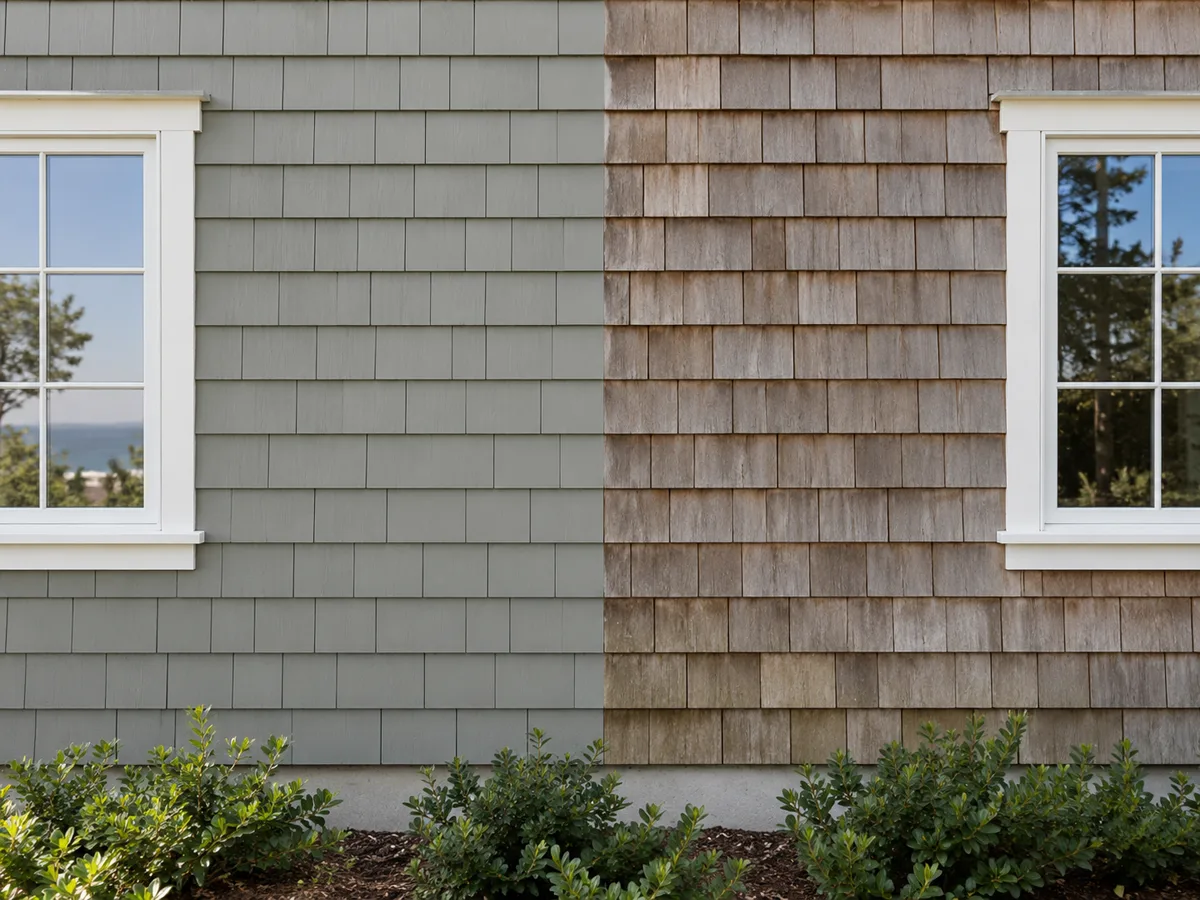
Cedar shingle wall split down the middle, the left half painted sage grey and the right half still weathered bare cedar, white-trimmed windows on each side.

Repair before paint

Soft, swollen or split siding is repaired or replaced before it is painted, never painted over. Paint seals moisture in as well as out, so a coat over a wet, punky board only hides the damage until it shows through again.

On the walk we press on bottom edges, check the boards behind sprinklers and downspouts, and look at the wall sections facing south and west, which take the most sun. Boards that have to come out are listed by location and count on the estimate, so you can see how much of the price is repair and how much is paint.

  • Bare wood that has sat in the sun gets a tape test. If wood fibers come away on the tape, the weathered surface is sanded back to sound wood and primed the same day, because paint will tear those loose fibers off the same way.
  • Mildew, which shows as gray or black speckling, is washed off with a cleaner before primer, since paint laid over it loses its grip.
  • On houses built before 1978, older layers are assumed to hold lead until tested. That means containment, wet scraping and HEPA cleanup instead of dry sanding, which the Forest Products Laboratory warns against on lead paint.

What siding painting costs in Torrance

Repainting a whole sided house in Torrance is typically estimated at roughly $6,000 to $20,000, with the siding material, the number of boards to repair and the wall height moving it most. That range is a planning figure from our service pricing, not a quote.

  • Square footage of siding and whether the house is one storey or two.
  • Access: slopes, side yards, landscaping against the walls and a second floor over a garage roof.
  • Repair count: replaced boards, sealed edges and new caulk at trim.
  • Material: T1-11 that has peeled needs more prep than sound lap siding.
  • Color change versus the same color, and how many body and trim colors there are.
  • Lead-safe practices on pre-1978 paint.
  • Product grade, and a stain-blocking or bonding primer where the material calls for one.

Every figure above is an estimate and can change once we have walked the walls and counted the boards. The written quote that follows that free walk sets the final price.

Color and sheen on siding

Darker colors absorb more sun, and on wood siding that heat means more warping and checking than a lighter color would cause, so a deep body color on a south-facing wall is a choice we talk through rather than just mix. Fiber cement handles a dark color with less movement than wood, which is one reason the material comes first in the conversation.

A tinted primer helps when the finish is a deep color, cutting down the coats needed for an even result. Satin is the usual sheen on siding because it sheds dirt better than flat and hides the texture of T1-11 grooves better than gloss. Samples are painted on your own wall, on the side that gets afternoon sun, and approved before the order is placed.

On the west side of Torrance, where the city meets Santa Monica Bay and the marine air comes in, we schedule the coats for the dry part of the day so primer is not laid over a damp board.

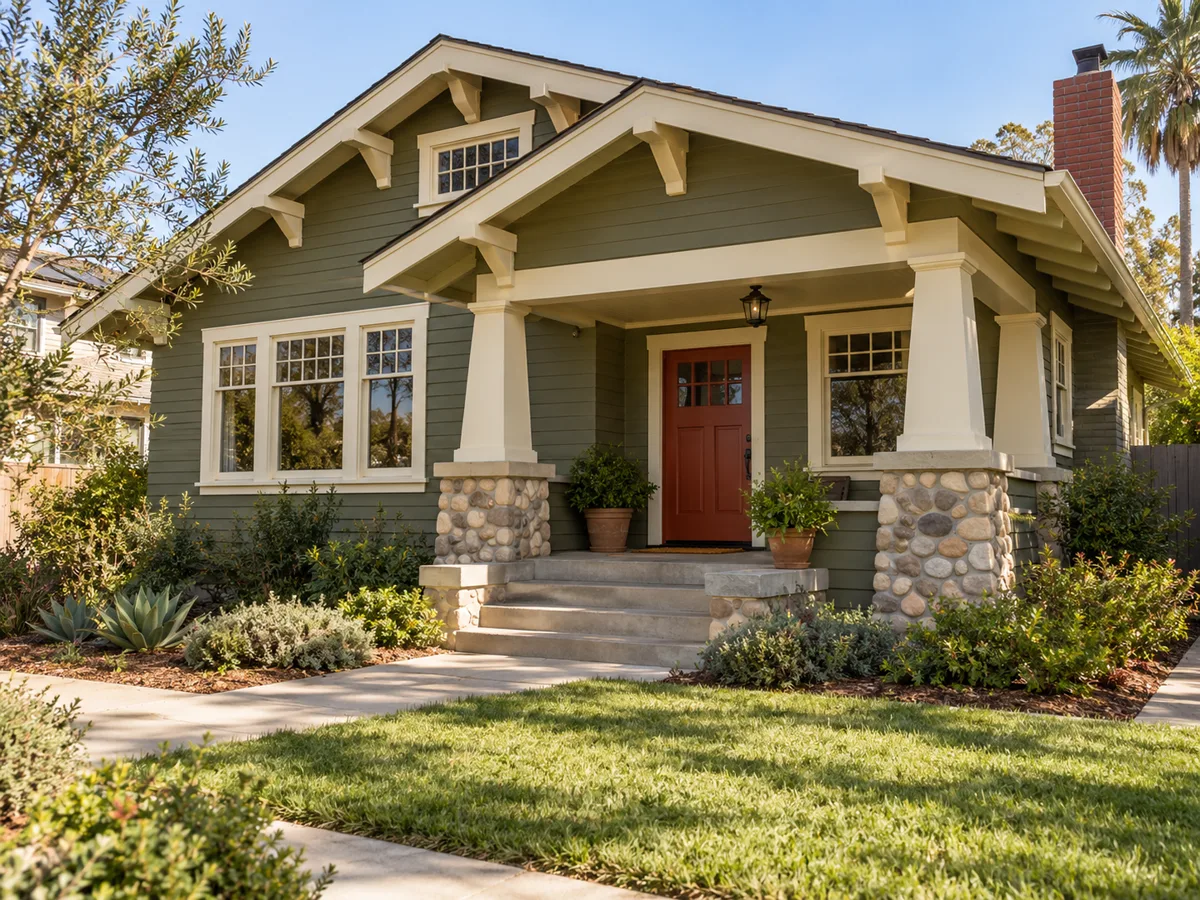
Craftsman bungalow painted olive green with cream trim and brackets, a red front door, tapered porch columns on river-stone piers, a brick chimney and a front lawn.

Booking a siding repaint

A siding job starts with a free walk around the house, then a written scope and estimate with the material, primer, coats and repairs named elevation by elevation. The start date and the expected length of the job are written on that estimate too.

The same approach scales up. Associations, apartment owners and property managers with sided buildings get the scope written per building, with the repair count listed separately so a board or a manager can approve it. Call or send the form for a walk at your house or property.

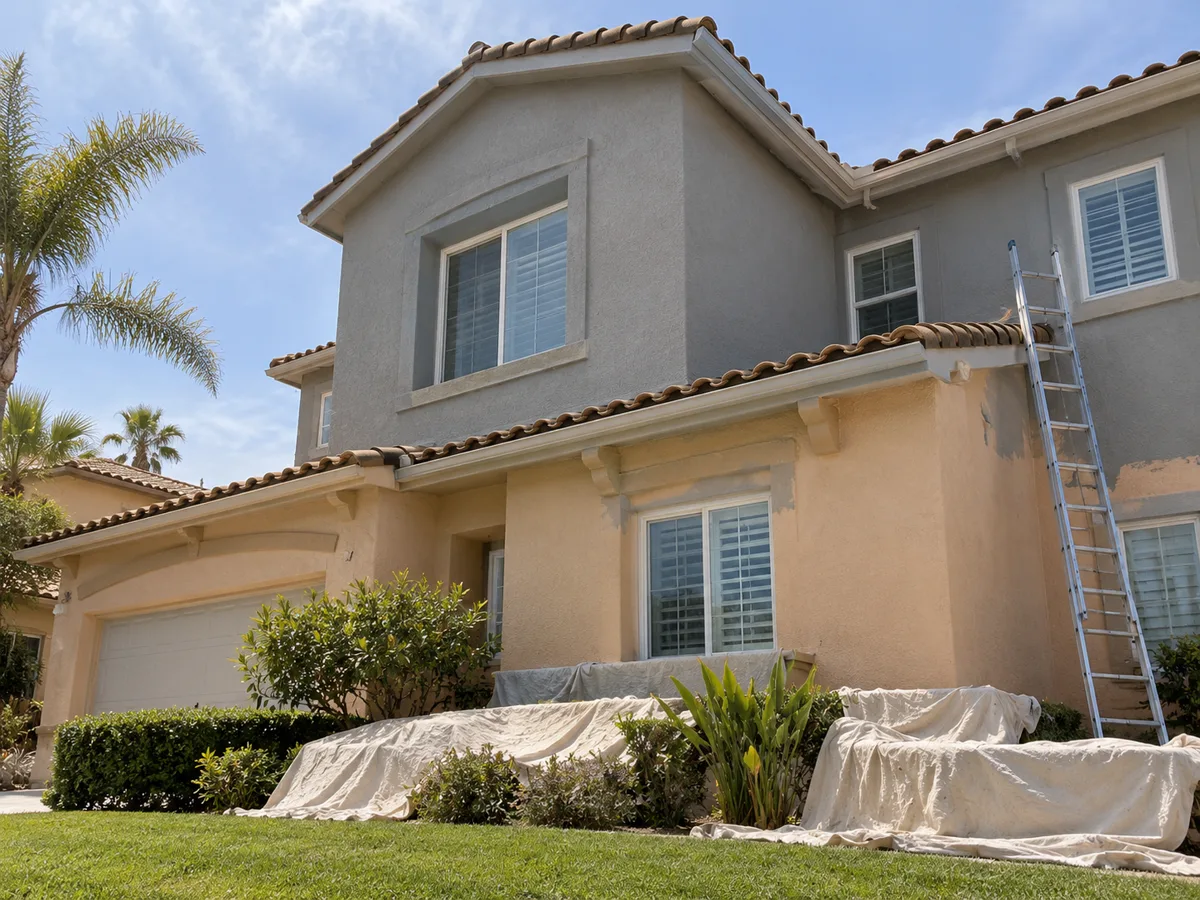
Two-story stucco house mid-repaint, the upper storey fresh warm grey and the lower storey still faded peach, an aluminium extension ladder against the wall and drop cloths over the shrubs.

Colors and Finishes

The process

How a Painting Job Runs

Four steps, and nothing is painted until you have approved the scope and the colors.

  1. The walk

    We walk the house or property with you, look at the stucco, the trim and the old coating, and note what the sun, the salt air and the marine layer have done to each side.

  2. The written scope

    You get the prep, the products, the colors and the dates in writing. For an association or a building, the scope is phased so residents and tenants know which day is theirs.

  3. Prep, then paint

    Washing, scraping, patching and caulking come first, because that is what the paint holds on to. Then primer where it is needed and the finish coats.

  4. The final walk

    We walk it again with you before we call it done, and touch up anything you point at.

Questions

Wood & Fiber Cement Siding Painting: Common Questions

Can you paint T1-11 siding that is already peeling?

Yes, but the loose paint has to come off first and the exposed face is sanded, so a peeling T1-11 wall costs more to prepare than one that is only faded. Panels that have delaminated or gone soft at the bottom are replaced rather than painted.

Can fiber cement siding be painted?

It can, and it takes paint well once it is washed and any chalky surface is dealt with. The open butt joints are sealed with a caulk made for fiber cement, and older boards are identified before anything is cut or sanded.

Do you replace rotted or swollen boards?

Yes. Damaged boards are listed on the estimate by location and count, replaced or repaired, then primed on every face before the wall is painted, so the new piece does not become the next weak spot.

Should my hardboard siding be repainted or replaced?

If the face is sound and only the bottom edges are swollen in a few places, repainting with sealed edges is usually the better value. When swelling runs along most of a wall, replacement is the honest answer, and we will say so on the walk.

Will you caulk every gap in my siding?

No. Joints and trim seams that are meant to be closed get a flexible sealant, but the gap under each lap board is left open so the wood can dry, because sealing it traps water behind the paint.

Do you test older Torrance homes for lead paint?

On any house built before 1978 we treat the older paint layers as lead until a test says otherwise, and we prepare them with containment and wet methods rather than dry sanding. A large share of Torrance was built in the 1950s, so this comes up often.

Do you paint siding on apartment buildings or HOA communities?

Yes. The scope is written per building, with the siding material, primer, coats and board repairs listed so a manager or board can approve each one before work starts.

How soon can you start?

The start date and the expected length of the job are written on your estimate after the walk, based on the size of the house and the repair count.

Free on-site estimate

Talk to us about wood & fiber cement siding painting

Homeowners get a free on-site estimate. Boards, managers and contractors can send a scope for a bid.

Call (424) 435-0964

Licensed, insured and bonded · License #585047. Calls only, we do not receive text messages.

Call (424) 435-0964Licensed, insured and bonded · License #585047