Fascia boards
Each run is probed for soft spots, rot is cut out, and every new or cut face is primed, including the back of a replacement board before it goes up.

Torrance Expert Painting is Los Angeles County's leading specialist in ranch home painting in Torrance, CA, specializing in wood fascia repair, eave and rafter tail finishing, and lead-safe prep on older paint layers. We offer garage door refinishing and board-and-batten painting.
Our team provides era-minded color planning, delivering a crisp, unbroken roofline for homes and tidy, hard-wearing finishes for both residential and commercial projects. We write a scope that lists every fascia run, eave and door by name, and we paint color samples on your own siding for approval before the first coat goes on.
From cutting a rotted rafter tail back to sound wood to repainting the house, garage and side gate in one plan, our team handles every detail. Serving Torrance, Rossmoor and Ladera Heights, we sequence the work so your home is never left standing half in the old color.
Why Torrance Expert Painting
No salesperson hands you to a stranger. The person who measures the job answers for it.
A Torrance ranch house is repainted around its shape: one story, a long low-pitched roofline, deep overhanging eaves and an attached garage facing the street. Those houses came with the post-war boom, when developers packaged Torrance tracts of 200 to 500 homes built almost on an assembly line and the city grew from some 20,000 residents to more than 100,000 in a single decade.
That history matters to the painter. Houses of one plan, built in the same years from the same materials, tend to fail in the same places, so the walk starts where weather hits first: the fascia, the rafter ends and the bottom of the garage door.
On a ranch house the long wood fascia and the eaves fail first, so they set the scope of the whole repaint. The fascia board caps the ends of the rafters and often holds the gutter, which puts it in the path of every drip and every overflow, while the deep overhang that keeps rain off the walls leaves the rafter ends out in the weather.
Each run is probed for soft spots, rot is cut out, and every new or cut face is primed, including the back of a replacement board before it goes up.
The cut end of each tail is the most exposed wood on the house, so it is sealed and primed on its end, not just its sides. A tail that is too far gone is cut back or capped rather than packed with filler.
Cutting in cleanly around vents and between rafters along a long overhang is slow brush work, and that labor is counted on its own line rather than buried in the wall price.
The wide garage door faces the street and its bottom edge takes splash and scuffs, so it gets its own cleaning, sanding and priming before the finish.
Many ranch houses wear two skins: stucco on most of the walls and a band of board-and-batten siding across the front or under the gables. Each needs its own prep, and a scheme that treats them as one surface usually leaves the wood looking tired beside fresh stucco.
Splitting them on the estimate also lets you choose a second color for the wood band, which is one of the simplest ways to bring back the mid-century look.
Much of Torrance's ranch housing went up between 1955 and 1965, well before lead was banned from residential paint in 1978, so the first coats under today's finish may contain lead. We treat that as likely rather than assume it away, and prep on these houses follows lead-safe practices from the first scrape.
The federal work-practice rules for paid work that disturbs paint on pre-1978 homes describe the steps we follow:
A lead test before scraping settles the question for your particular house, and its result changes how much containment the job needs, which is why the testing and containment both appear on the estimate.
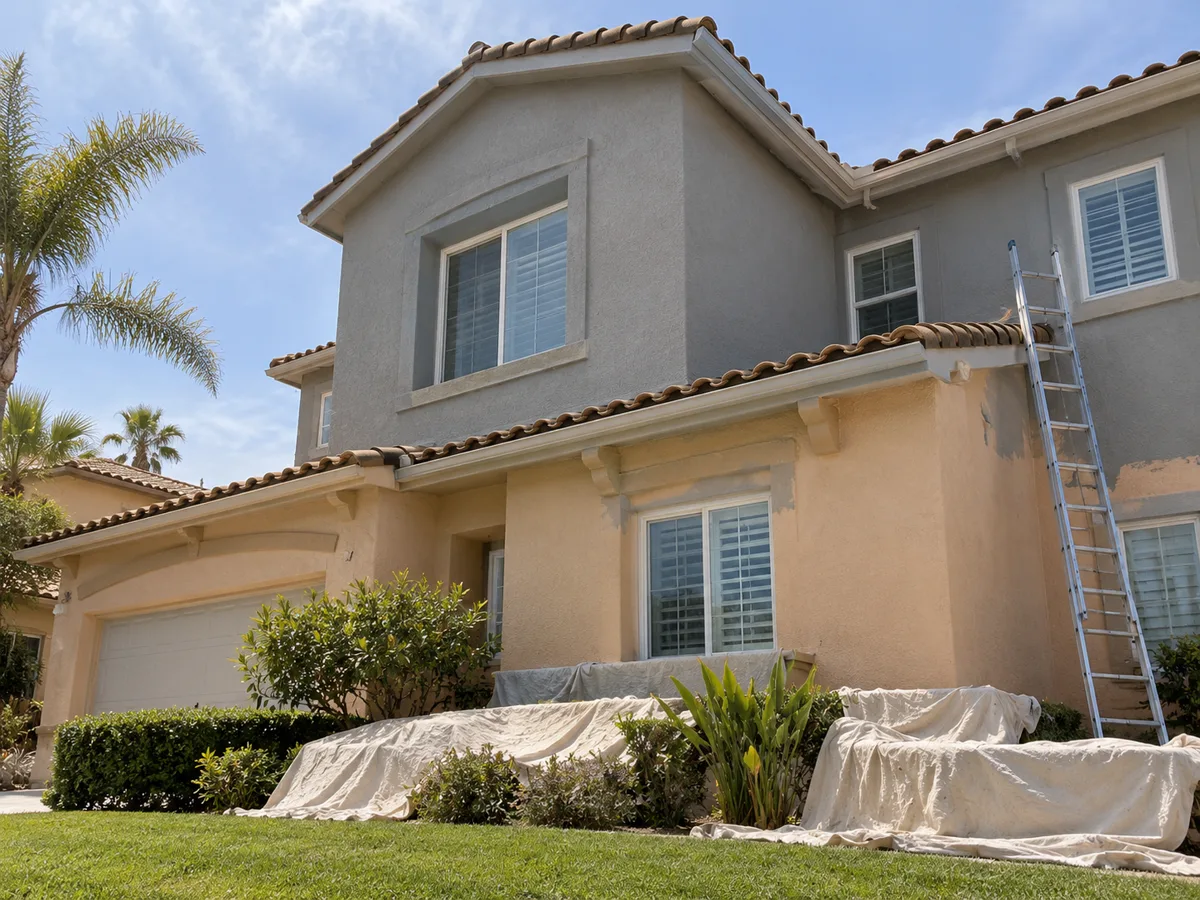
Repainting a single-story Torrance ranch house is typically estimated at roughly $5,000 to $16,000, and on these homes the fascia and eave work, more than the wall area, is often what moves the figure most.
These numbers are estimates only and may change after we have seen the wood up close; your final price is the one printed on the written quote from the free walk.
A ranch house reads best when its color plan follows its long, low lines instead of fighting them. One calm body color with a slightly deeper trim keeps the roofline unbroken, and the front door is the single place a strong contrasting color earns its keep, giving a wide horizontal facade one focal point.
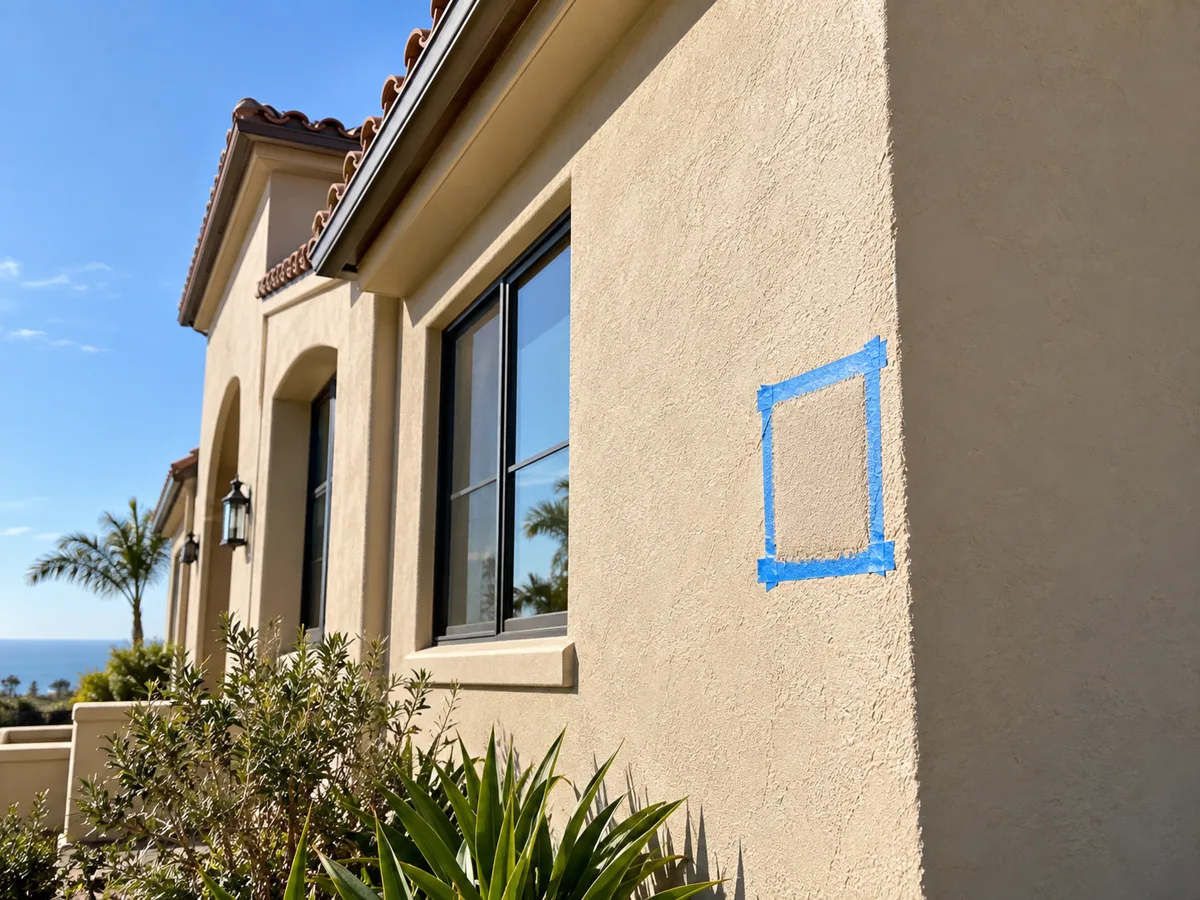
A trendy whole-house color can make a mid-century ranch look like a quick flip. Large samples of two or three schemes go on the wall so you can judge them against the roof and the neighbors before anything is ordered.
The same post-war pattern repeats across the area. Rossmoor was built out between 1955 and 1961 as one ranch community of single-family homes, and Ladera Heights adds 1960s custom homes by Valentine and Gallant on hillside lots, so the fascia-first approach on this page applies there as much as on Torrance's own tract streets.
Wherever the house sits, the order stays the same: roof edge first, older paint handled safely, then walls, doors and color.
The process
Four steps, and nothing is painted until you have approved the scope and the colors.
We walk the house or property with you, look at the stucco, the trim and the old coating, and note what the sun, the salt air and the marine layer have done to each side.
You get the prep, the products, the colors and the dates in writing. For an association or a building, the scope is phased so residents and tenants know which day is theirs.
Washing, scraping, patching and caulking come first, because that is what the paint holds on to. Then primer where it is needed and the finish coats.
We walk it again with you before we call it done, and touch up anything you point at.
Questions
A full repaint of a single-story Torrance ranch is typically estimated at roughly $5,000 to $16,000, with fascia repair and lead-safe prep often deciding where in that band a house lands. The written quote after our walk sets your actual price.
If it was built before 1978, earlier coats may contain lead, and most Torrance ranch tracts predate that year. A test confirms it; until then we prep the house as though lead is present.
Sound fascia only needs prep and paint, while boards with soft spots or split ends should be repaired or replaced first, because paint over rot fails quickly. The estimate names each board we plan to replace.
Yes. Wood and metal garage doors are cleaned, sanded or deglossed as needed, primed where bare, and finished in the body or trim color you choose.
Yes. Each tail is scraped, its end sealed and primed, and the finish is brushed rather than sprayed, so paint reaches the end grain and the gaps between tails.
If that is your goal, the color proposal starts from the house's own lines and materials, and the schemes are sampled on the wall for you to judge before anything is bought.
Yes. Wood siding is primed wherever it is bare and brushed into the batten edges, while the stucco is washed, patched and rolled or sprayed, and each is priced as its own line.
Yes, including the ranch community of Rossmoor and the 1960s homes of Ladera Heights, along with the beach cities and the Palos Verdes Peninsula.
Homeowners get a free on-site estimate. Boards, managers and contractors can send a scope for a bid.
Licensed, insured and bonded · License #585047. Calls only, we do not receive text messages.