Rinse with plenty of fresh water
Salt is removed by flooding the surface with clean water, not by blasting it, since a high-pressure washer can leave much of the salt behind or drive it up behind boards and into crevices.

Torrance Expert Painting is Los Angeles County's trusted specialist in coastal exterior painting in Torrance, CA, specializing in fresh-water salt rinsing, rust treatment on railings and fasteners, and primers that seal in what washing cannot reach. We offer marine-layer scheduling and stain blocking on salt-marked wood.
Our team provides moisture checks before painting each day, delivering finishes that stay bonded to the wall for homes and well-protected metal for both residential and commercial projects. We test the walls with a moisture meter before primer goes on, and the written scope you sign names the rinse, the rust treatment and every coat.
From resetting one rust-stained nail head in a salt-crusted eave to repainting a full bluff-side house, our team handles every detail. Serving Torrance, Hermosa Beach, Manhattan Beach and Palos Verdes Estates, we watch the morning fog as closely as the forecast and start only when the surface says it is ready.
Why Torrance Expert Painting
No salesperson hands you to a stranger. The person who measures the job answers for it.
On the west side of Torrance, salt carried off Santa Monica Bay settles on walls, eaves and metal, and the marine layer keeps those surfaces damp into the morning. The city has about a mile and a half of beachfront, with Torrance Beach running between Redondo Beach and Malaga Cove, so the houses nearest the sand and up the Hollywood Riviera slopes take the most exposure.
Salt does its damage in three ways:
The fog adds a second problem. Marine-layer clouds usually move in overnight and clear between mid-morning and early afternoon, and the effect starts earliest and lasts longest right at the coast, so a wall a few blocks from the beach can still be wet when an inland wall is ready for paint.
On a coastal house the wash is the most important coat, because paint cannot hold onto salt and anything painted over cannot be washed off afterward. Salt collects most where rain never reaches: under eaves, in porch ceilings, behind railings and on the sheltered side of window frames.
Salt is removed by flooding the surface with clean water, not by blasting it, since a high-pressure washer can leave much of the salt behind or drive it up behind boards and into crevices.
Eaves, soffits and the undersides of trim get a hand scrub, because those are the places where salt has been building up for years.
After the rinse the house is left to dry, and the wood and stucco are read with a moisture meter before any primer is opened.
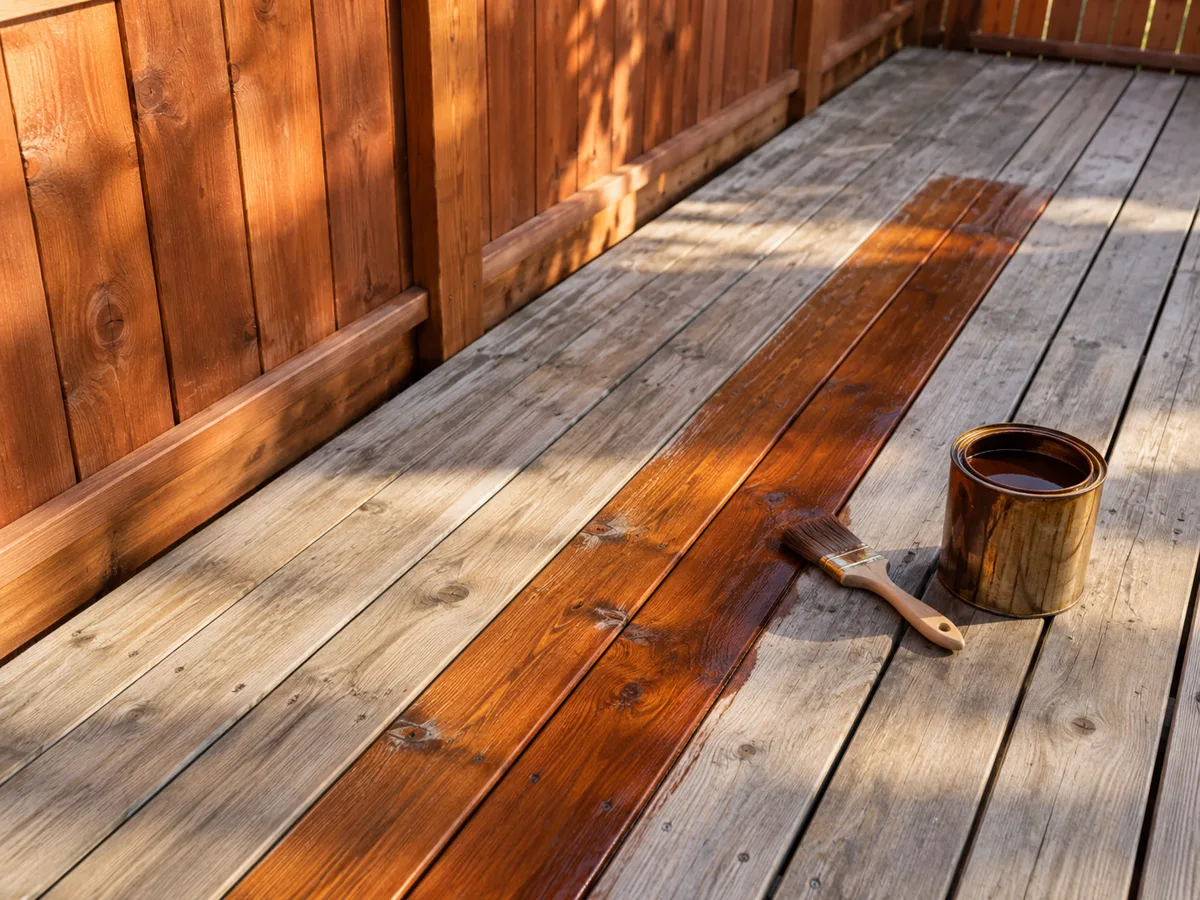
Old chalky paint and weathered bare wood can hold salt that no rinse fully removes, so those areas get a primer that locks it in before the topcoat.
Rusting nails, railings and hinges are treated before paint, or the rust bleeds back through the new color and keeps spreading underneath it. Rust also takes up more room than the steel it formed from, so as it grows it pushes the paint off from below.
If rust has eaten through a post, a baluster or a weld, the walk notes it so a welder or fabricator can repair it first; paint over a hole only hides it.
A coastal exterior repaint in Torrance is typically estimated at roughly $6,000 to $25,000, and the extra over an inland house comes from the rinse, the rust work and the primer more than from the paint itself.
Treat these figures as estimates that can change with what the walk turns up; the final price is whatever the written quote says.
Coatings near the beach are chosen for adhesion and for keeping water out first, and for color second. On a coastal house the failures almost always start at the bond, so the primer matched to each surface matters more here than the label on the topcoat.
Upkeep matters as much as product. Rinsing the eaves and sheltered corners with fresh water from time to time removes new salt before it can build up under the next coat, and it costs you nothing but a hose.
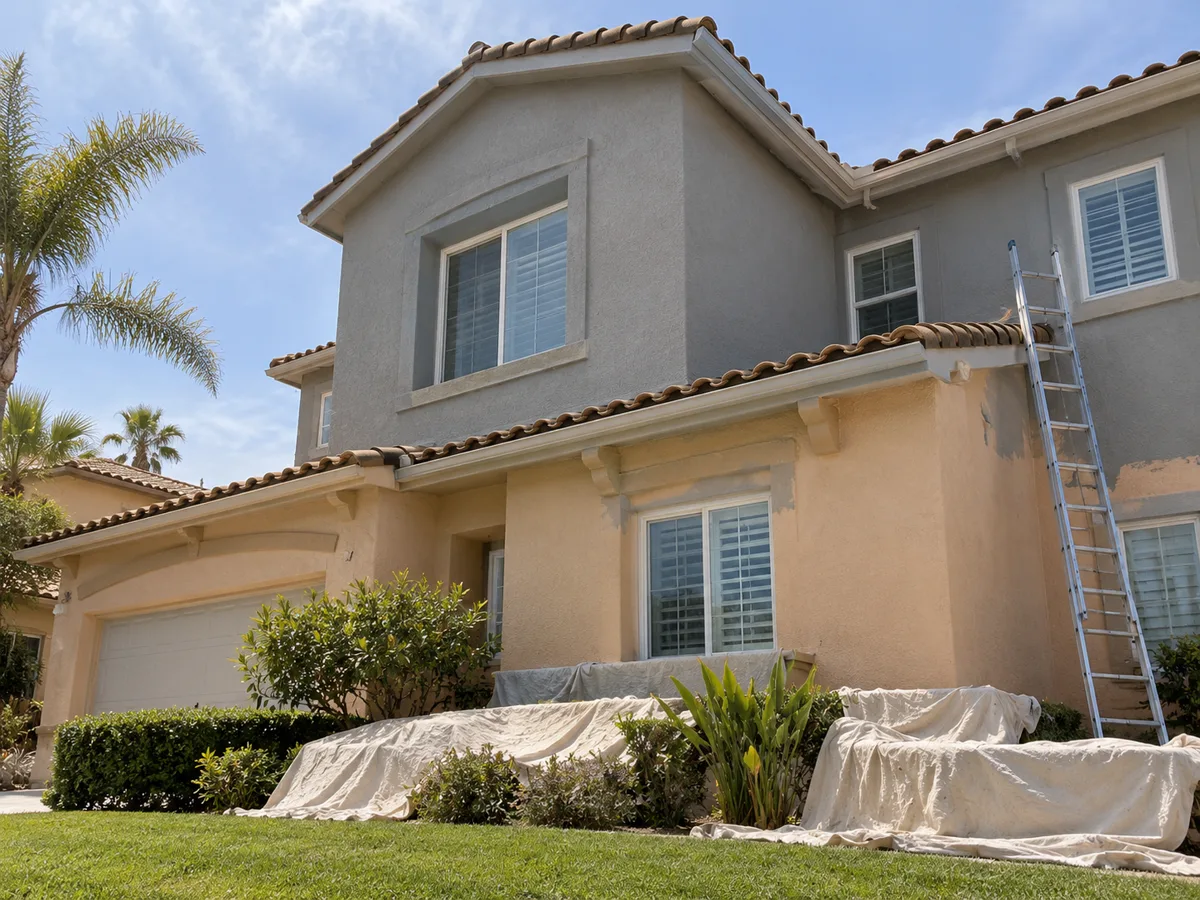
Coastal painting starts when the surface is dry, not at a fixed hour. Dew forms when a surface cools below the dew point of the air around it, and under a marine layer that air is close to saturated, so a north wall or a shaded eave can stay wet long after the street has dried.
That shapes each day. The sunny, dry elevations are worked first and the shaded sides later, and May and June, when the gloom is most persistent, often mean shorter windows for paint. Your estimate states the start date and expected length; the fog decides the order of work inside that plan.
The process
Four steps, and nothing is painted until you have approved the scope and the colors.
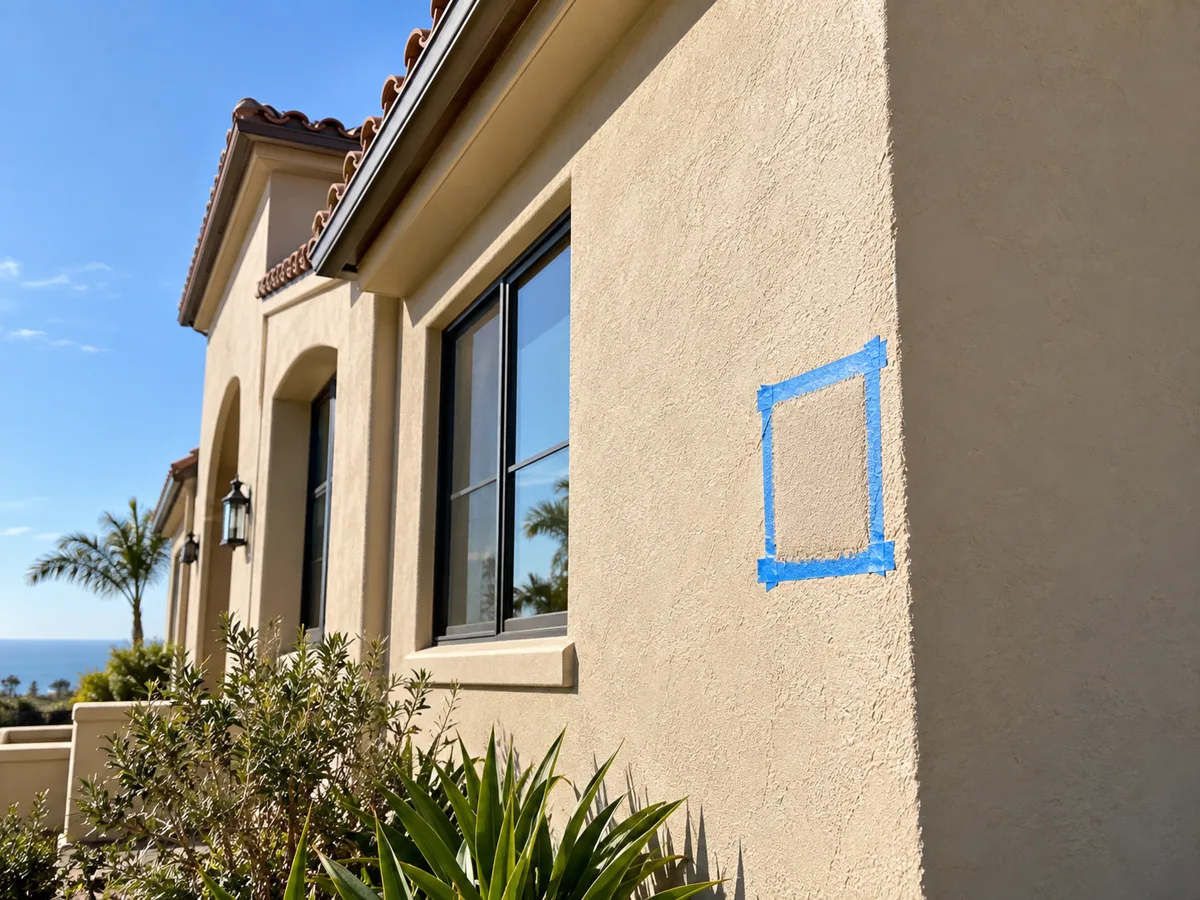
We walk the house or property with you, look at the stucco, the trim and the old coating, and note what the sun, the salt air and the marine layer have done to each side.
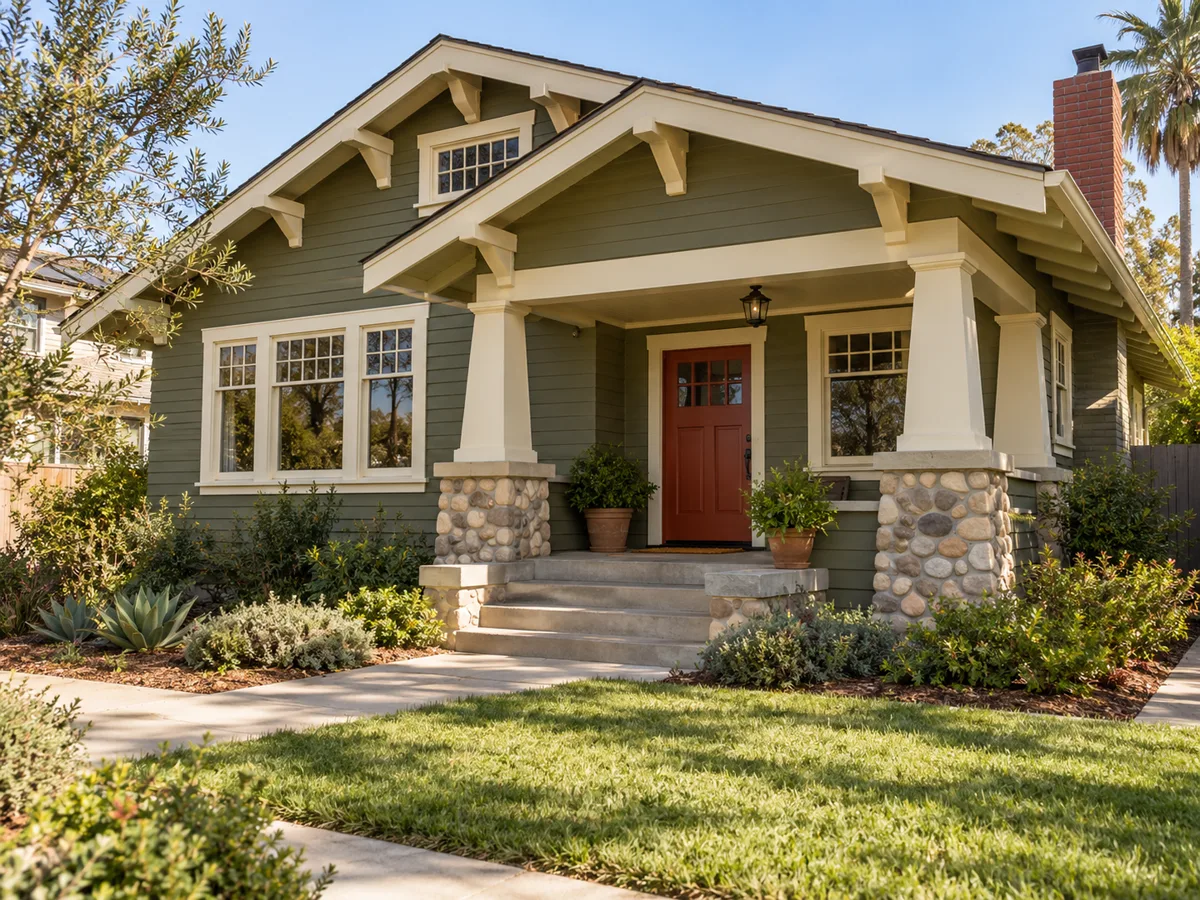
You get the prep, the products, the colors and the dates in writing. For an association or a building, the scope is phased so residents and tenants know which day is theirs.
Washing, scraping, patching and caulking come first, because that is what the paint holds on to. Then primer where it is needed and the finish coats.
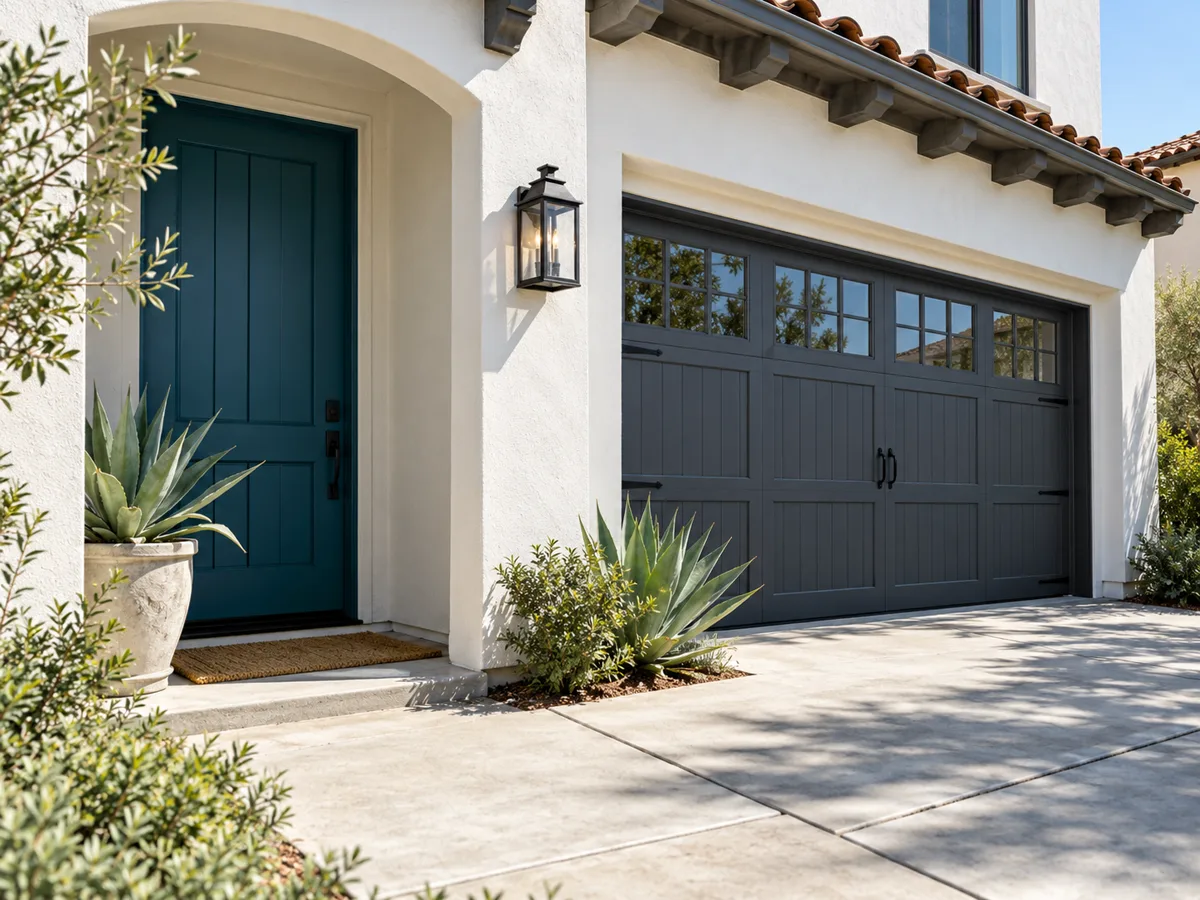
We walk it again with you before we call it done, and touch up anything you point at.
Service area
Questions
A coastal repaint in Torrance is typically estimated at roughly $6,000 to $25,000, with salt removal, rust repair and access moving the figure most. Your written quote after the walk sets the final number.
Because the marine layer often leaves walls damp until it burns off, usually somewhere between mid-morning and early afternoon. Paint applied over a wet surface does not bond, so work begins once the surface reads dry.
We rinse it with large volumes of fresh water at moderate pressure. High pressure can push salt behind boards and into cracks, where it waits to come back through the paint.
Most railings with surface rust can be scraped back to sound metal, primed and repainted. Where rust has eaten through a post or a weld, that section needs a metal repair before any paint.
Homes nearest Torrance Beach and on the Hollywood Riviera slopes take the most salt and fog, and the effect fades the farther inland you go. On the walk we look for salt crust, rusted nails and chalky paint to judge your house rather than going by a map.
They can if salt is painted over, which is why sheltered areas are rinsed thoroughly and any area that cannot be washed clean is sealed with a stain-blocking primer before the topcoat.
Yes. Corroded aluminum is cleaned of its white powder and primed with a product rated for the metal, and steel garage doors get rust spots treated before the finish coats.
Yes. The same rinse, rust and timing approach applies in the beach cities, along with Redondo Beach and the Palos Verdes Peninsula.
Homeowners get a free on-site estimate. Boards, managers and contractors can send a scope for a bid.
Licensed, insured and bonded · License #585047. Calls only, we do not receive text messages.