Skip to content
Call (424) 435-0964Licensed, insured and bonded · License #585047

Cedar Shake Painting and Staining in Torrance

Torrance Expert Painting is the Los Angeles County specialist for cedar shake painting in Torrance, CA, specializing in semitransparent cedar staining, solid-body stain on shingle walls and stain-blocked painting over cedar. We offer weathered cedar cleaning and brightening for gray shakes.

  • Free on-site estimate
  • Written scope, coat by coat
  • Colors you approve first

Get a free painting estimate

Or call (424) 435-0964. Calls only, we do not receive text messages.

About our cedar shake & shingle painting and staining

Our team provides tannin-blocking primer under every light color, delivering clean whites and creams over red wood that would otherwise bleed through, for both residential and commercial projects. We sample your chosen stain or paint on a patch of your own shakes, and you approve the patch before any wall is coated.

From choosing between a penetrating stain and a film-forming finish to recoating every gable and accent wall, our team handles every detail. Serving Torrance, Palos Verdes Estates, Rancho Palos Verdes and Hermosa Beach, we match the finish to the cedar rather than to habit.

Why Torrance Expert Painting

How We Work

No salesperson hands you to a stranger. The person who measures the job answers for it.

Written scopePrep, primer and finish coats listed surface by surface
Colors firstSamples on your wall, and association submittals prepared for review
One crewThe crew that quotes the job is the crew that paints it
CA License #585047Licensed, insured and bonded

Stain, solid stain or paint

Cedar shake painting in Torrance begins with one decision: a penetrating stain that soaks in, a solid-body stain that forms a thin film, or paint over a stain-blocking primer. Each one looks different, ages differently and leaves you with a different path for the next recoat, so we decide it with you on the walk.

Semitransparent stain

A penetrating stain flows into the wood and does not form a film, so it cannot crack or peel. It fades and erodes instead, and a recoat is mostly a brush-down and another coat. The grain and the texture of split shakes stay visible. It only works on bare or previously stained cedar: nothing penetrates an area that already carries paint or solid stain.

Solid-body stain

Solid-color stain hides the grain like paint and forms a film like paint, but it is made to erode faster, so the film never gets too thick even after many coats. From the street a solid stain and a paint job look almost the same. The difference shows years later, when the stained wall has worn thin evenly and the painted one is holding its film or starting to flake at the butts.

Paint

Paint gives the cleanest color and the most sheen choices, and it suits trim-heavy houses where the shingles are one accent among several painted surfaces. It is also a one-way door: once shakes are painted, going back to a natural stain means stripping, and we tell you that before you choose.

Cleaning weathered cedar

Weathered gray cedar will not hold a film until the weathered layer is cleaned off. Gray cedar is not dirty so much as worn: sunlight and water remove the colored compounds at the surface and leave loose, silvery fibers, and paint or solid stain laid over those fibers tears them off as it moves.

  • We clean with an oxygen-based cleaner where we can. The Forest Products Laboratory reports oxygen bleaches as less likely to damage low-density woods such as western redcedar than chlorine bleach.
  • Strong caustic cleaners that pulp the wood are a last resort, used only where mildew is embedded in an old finish.
  • Pressure is kept low. Aggressive power washing erodes the soft earlywood and leaves a raised washboard surface on shakes and shingles.
  • An oxalic acid brightener follows where there is tannin staining or iron staining from old nails, because it removes both. It does not remove mildew, which is why cleaning comes first.
  • Cleaning does not add color back. If you want warm cedar tones after a gray wall is cleaned, that color comes from the stain.

Bare spots that are sound get a quick tape test before a film finish. If fibers come away on the tape, the surface is sanded back to firm wood first.

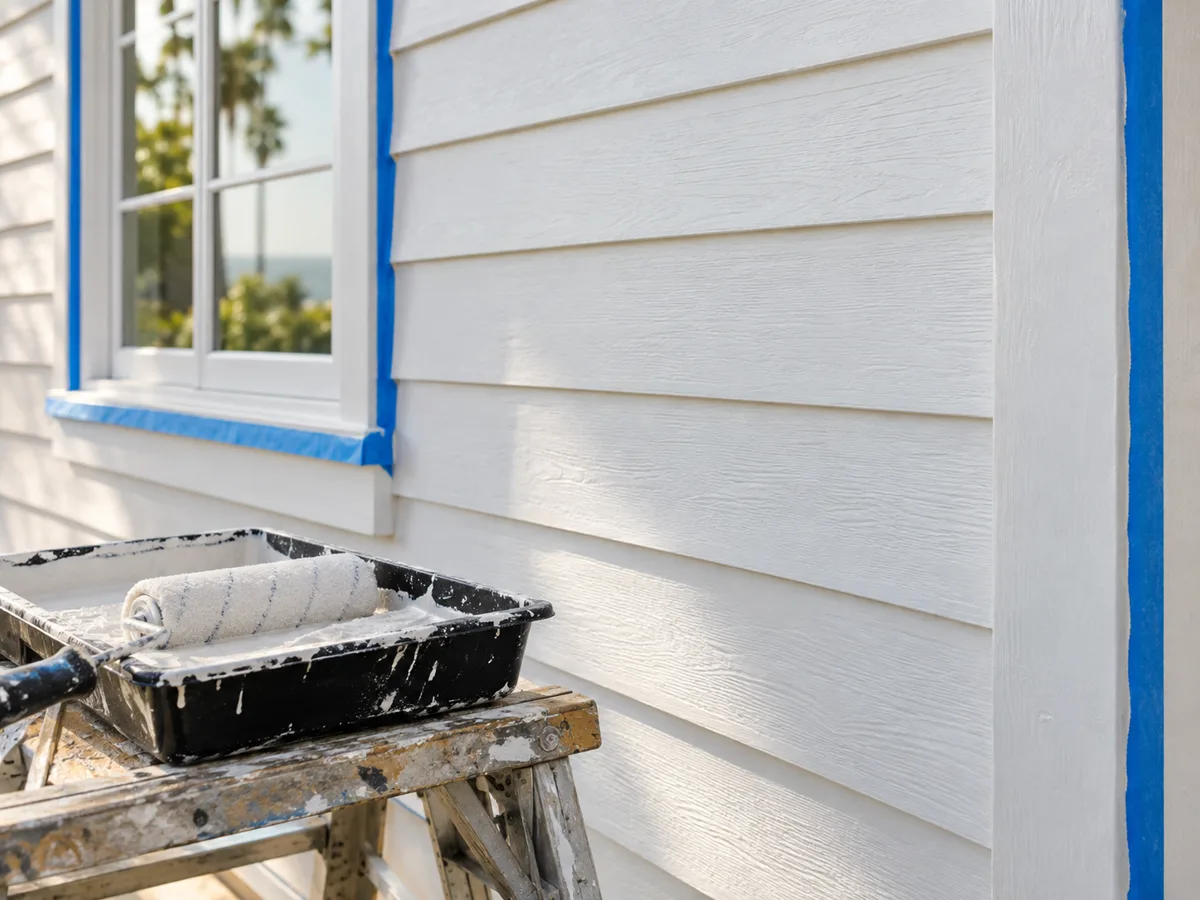
White lap siding with blue masking tape along the window and corner trim, and a paint tray with a loaded roller resting on a paint-spattered sawhorse.

Tannin bleed and primers

Cedar can bleed tannins through a light color unless a stain-blocking primer goes on first. Western redcedar heartwood is rich in water-soluble extractives, the same compounds that give it its color and its rot resistance, and water carries them to the surface, where they dry as a yellow to reddish brown stain.

The USDA Forest Products Laboratory puts it bluntly: without a stain-blocking layer, extractives can bleed through as many topcoats as you apply. Adding another coat of white does not fix it. If bleed shows up after a repaint, the right move is to stop, prime the affected area with a blocking primer and then topcoat again.

  • Light colors and whites get a stain-blocking primer on every shake, not just on the ones already showing spots.
  • Darker stains and natural tones usually hide extractives without a primer, which is one reason they suit cedar.
  • Rust-brown streaks below nail heads are iron stain, a reaction between tannin-rich wood and plain steel fasteners. Replacement shakes go on with stainless or hot-dipped galvanized nails.

What cedar shake painting costs

Staining or painting cedar shakes in Torrance is typically estimated at roughly $1.50 to $4 per square foot of wall, with the condition of the wood and the finish you choose moving it most. That figure comes from our service pricing and is a planning range only.

  • Weathered gray shakes need cleaning and brightening that a recently stained wall does not.
  • A stain recoat over old stain is the lightest job; paint over bare or gray cedar with a blocking primer is the heaviest.
  • Light colors add the stain-blocking primer coat.
  • Gables, dormers and second-storey walls need ladders or lifts.
  • Split, cupped or missing shakes to replace before finishing.
  • Old paint on houses built before 1978 is handled with lead-safe practices.

Treat every number here as an estimate that may change once the shakes are inspected up close. After the walk, your written quote sets the final price.

Gables, accents and whole walls

Cedar shingles frequently cover only part of a house, such as a gable end, a front bay or a band below the eaves, with stucco or lap siding on the rest. That mix changes the job, because the shingled area may want stain while everything around it takes paint.

On an accent we mask the stucco and trim edges tight to the shingle line and keep stain off the neighboring surfaces. On a whole shingled wall we work a wet edge course by course, since a semitransparent stain that is lapped over a dried edge leaves marks you can see from the sidewalk.

The gaps between courses are left open on purpose. Shingles need room to swell when they get wet, and shingles laid too tight buckle; caulking those gaps would trap water and cause the same failure. Split or cupped pieces are replaced with matching cedar and finished to blend.

On the bluffs and on the west side, where Torrance meets Santa Monica Bay, mornings can stay damp, so staining starts once the wood has dried for the day.

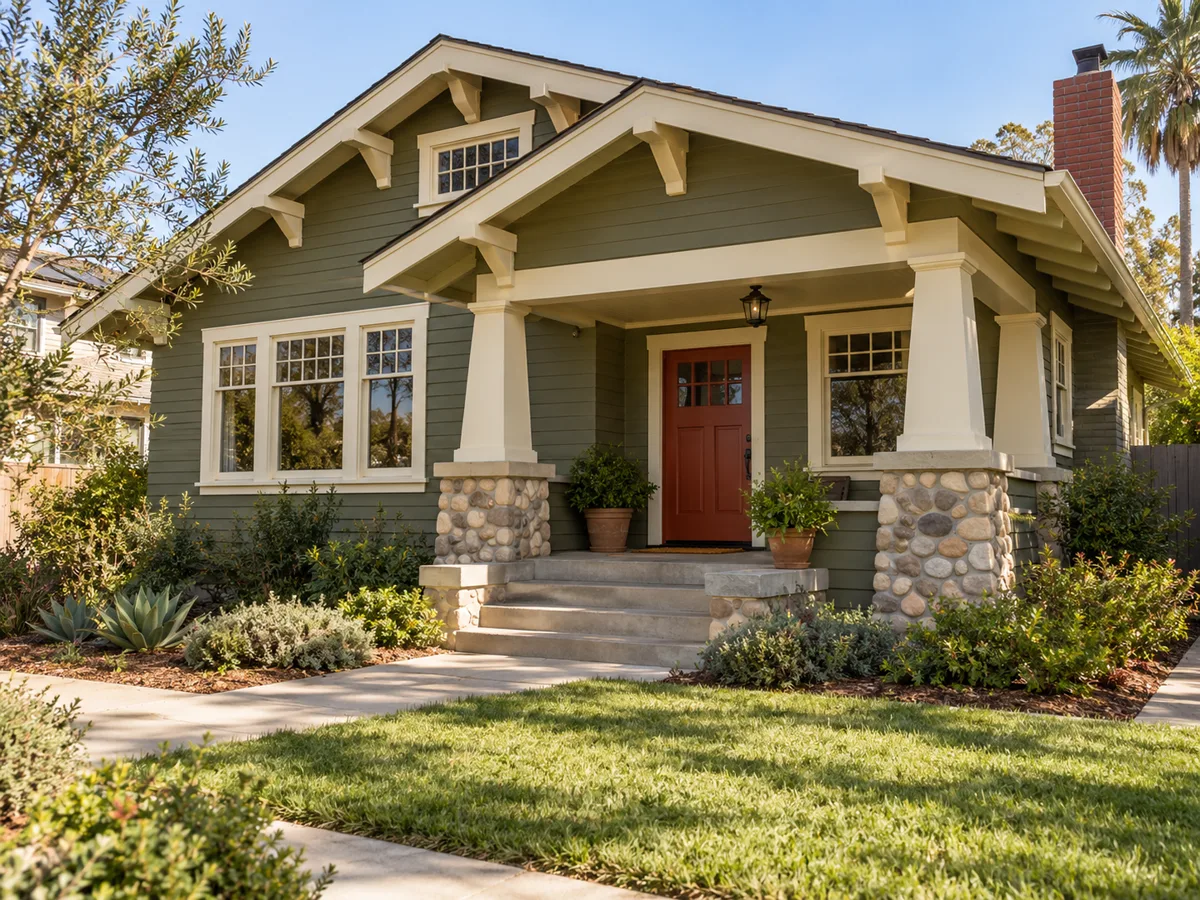
Craftsman bungalow painted olive green with cream trim and brackets, a red front door, tapered porch columns on river-stone piers, a brick chimney and a front lawn.

Getting your cedar walked and quoted

Every cedar job starts with a free walk, where we look at what is on the wood now: bare gray cedar, old stain, solid stain or paint. That answer decides which finishes are still open to you, and the written estimate states it along with the cleaning method, primer and number of coats.

Associations and property managers with shingled clubhouses, gatehouses or building accents get the same walk and a written scope per structure. Call or use the form to book yours.

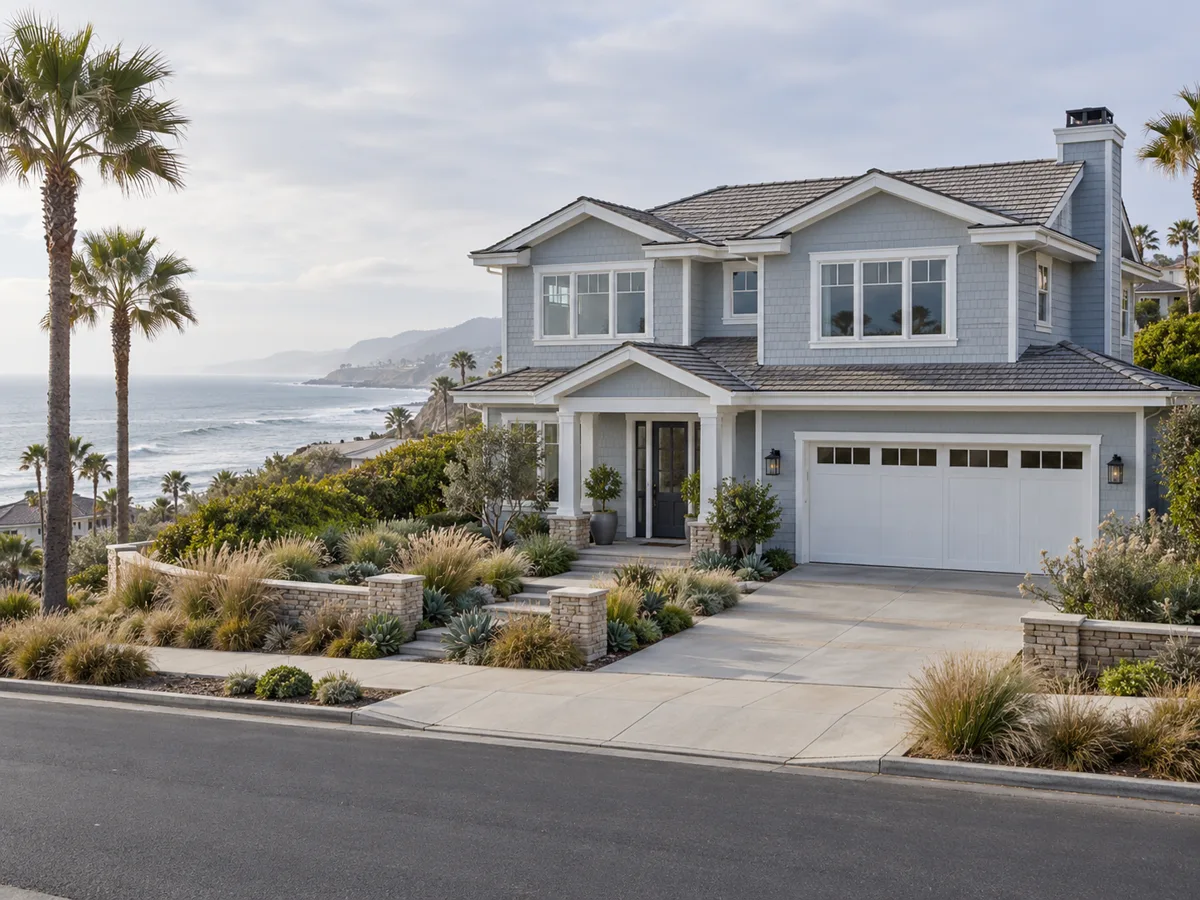
Two-story grey-blue shingle-style home with white trim and garage door, palm trees and native grasses in front, ocean and a hazy headland behind.

Colors and Finishes

The process

How a Painting Job Runs

Four steps, and nothing is painted until you have approved the scope and the colors.

  1. The walk

    We walk the house or property with you, look at the stucco, the trim and the old coating, and note what the sun, the salt air and the marine layer have done to each side.

  2. The written scope

    You get the prep, the products, the colors and the dates in writing. For an association or a building, the scope is phased so residents and tenants know which day is theirs.

  3. Prep, then paint

    Washing, scraping, patching and caulking come first, because that is what the paint holds on to. Then primer where it is needed and the finish coats.

  4. The final walk

    We walk it again with you before we call it done, and touch up anything you point at.

Questions

Cedar Shake & Shingle Painting and Staining: Common Questions

Should my cedar shakes be stained or painted?

If the shakes are bare or already stained, a penetrating stain is usually the lower-maintenance choice and keeps the texture. If they already carry paint or solid stain, staying with a film finish is the practical answer, because a penetrating stain cannot soak into a painted surface.

Why are brown spots coming through my white shingles?

That is tannin or extractive bleed from the cedar. It keeps coming through extra coats of white, so the fix is a stain-blocking primer over the affected shingles and then a fresh topcoat.

Can you bring gray cedar back to its original color?

Cleaning and brightening remove the gray, loose surface and any mildew, which reveals the wood underneath. The warm color you see afterward is set by the stain, since cleaning on its own does not add color.

Can painted shakes go back to a natural stain?

Only by stripping the paint or solid stain off first, because a penetrating stain will not absorb into a film. On most houses that is a large job, so we price it separately and talk it through before you commit.

Do you pressure wash cedar shakes?

At low pressure only, after a cleaner has done the work. High pressure gouges the soft part of the grain and leaves a ribbed, fuzzy surface that takes stain unevenly.

Should the gaps between my shingles be caulked?

No. The gaps let the shingles expand when they get wet. Caulked gaps make shingles buckle and hold water behind the finish.

Do you replace split or missing shakes?

Yes. Damaged pieces are counted on the estimate, replaced with cedar and fastened with stainless or hot-dipped galvanized nails so they do not streak, then finished to blend with the wall.

How much does it cost to stain cedar shingles?

A recoat over sound old stain is the lowest-cost version of this job, and gray or painted cedar costs more to prepare. Your written quote after the walk sets the price for your walls.

Free on-site estimate

Talk to us about cedar shake & shingle painting and staining

Homeowners get a free on-site estimate. Boards, managers and contractors can send a scope for a bid.

Call (424) 435-0964

Licensed, insured and bonded · License #585047. Calls only, we do not receive text messages.

Call (424) 435-0964Licensed, insured and bonded · License #585047