Limewash
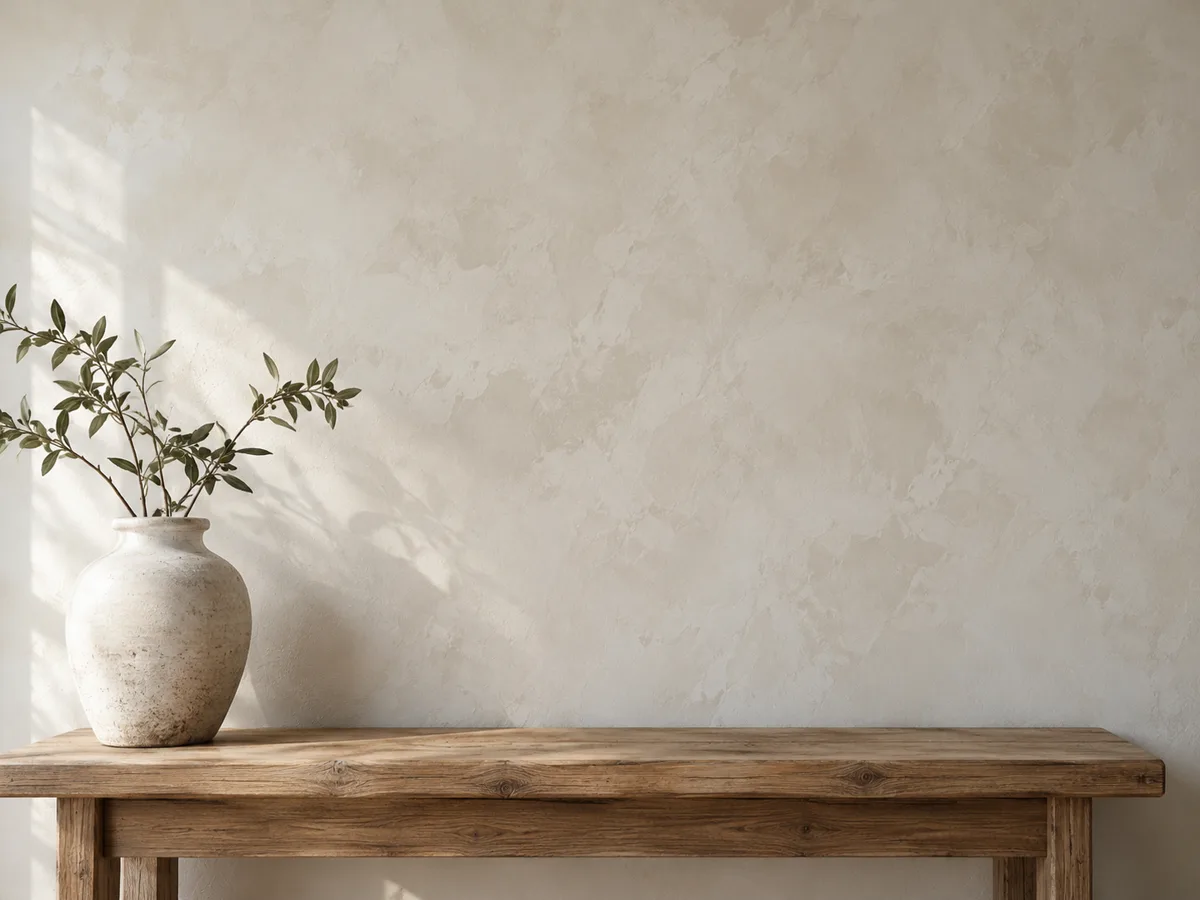
Limewash is slaked lime in water with mineral pigments, brushed on in thin coats and cured by the air. It has a soft, chalky, slightly cloudy look, and it gradually weathers and softens over time, which is part of its appeal.

Torrance Expert Painting offers limewash and mineral coatings in Torrance, applying limewash and mineral silicate finishes to stucco, brick and plaster walls. These finishes breathe with the wall, and we tell you plainly when a sealed or coated wall cannot take them.
Limewash and mineral coatings bond to masonry instead of sitting on it like a film, which lets the wall release moisture. We prepare the surface, test a sample on your wall and apply the coats by brush or roller in thin, built-up layers.
The work suits stucco, brick, block and lime plaster, outside and in, across Torrance, Palos Verdes, Redondo Beach and the South Bay. When a wall is sealed with an old elastomeric or acrylic coating, we explain what removal or a different system would involve before you commit.
Why Torrance Expert Painting
No salesperson hands you to a stranger. The person who measures the job answers for it.
Both finishes are mineral and breathable, but they are not the same material and they do not behave the same. The choice depends on the wall and on how much color depth and durability you want.
Limewash is slaked lime in water with mineral pigments, brushed on in thin coats and cured by the air. It has a soft, chalky, slightly cloudy look, and it gradually weathers and softens over time, which is part of its appeal.
Silicate paint reacts chemically with mineral surfaces like stucco and masonry and bonds into them. It is harder wearing and more color-stable than limewash, with a flat matte finish and high vapor permeability.
Some older stucco and plaster walls carry a lime-rich finish coat, and these take limewash very well. We check with a small test to see how the wall takes water before choosing a system.
A breathable coating lets water vapor pass through the wall instead of trapping it behind a film, and that matters most on old masonry and stucco. Mineral coatings are not a better paint for every wall, though, and the wrong wall is where they disappoint.
If the wall is sealed, the options are to remove the old coating, to use a special primer made to bridge to mineral paint, or to choose a high-quality breathable acrylic instead, and we lay those out on the walk.
The surface decides the result, so prep is where most of the work happens. A mineral coating only bonds to a clean, absorbent, sound wall, and each step is written into the scope.
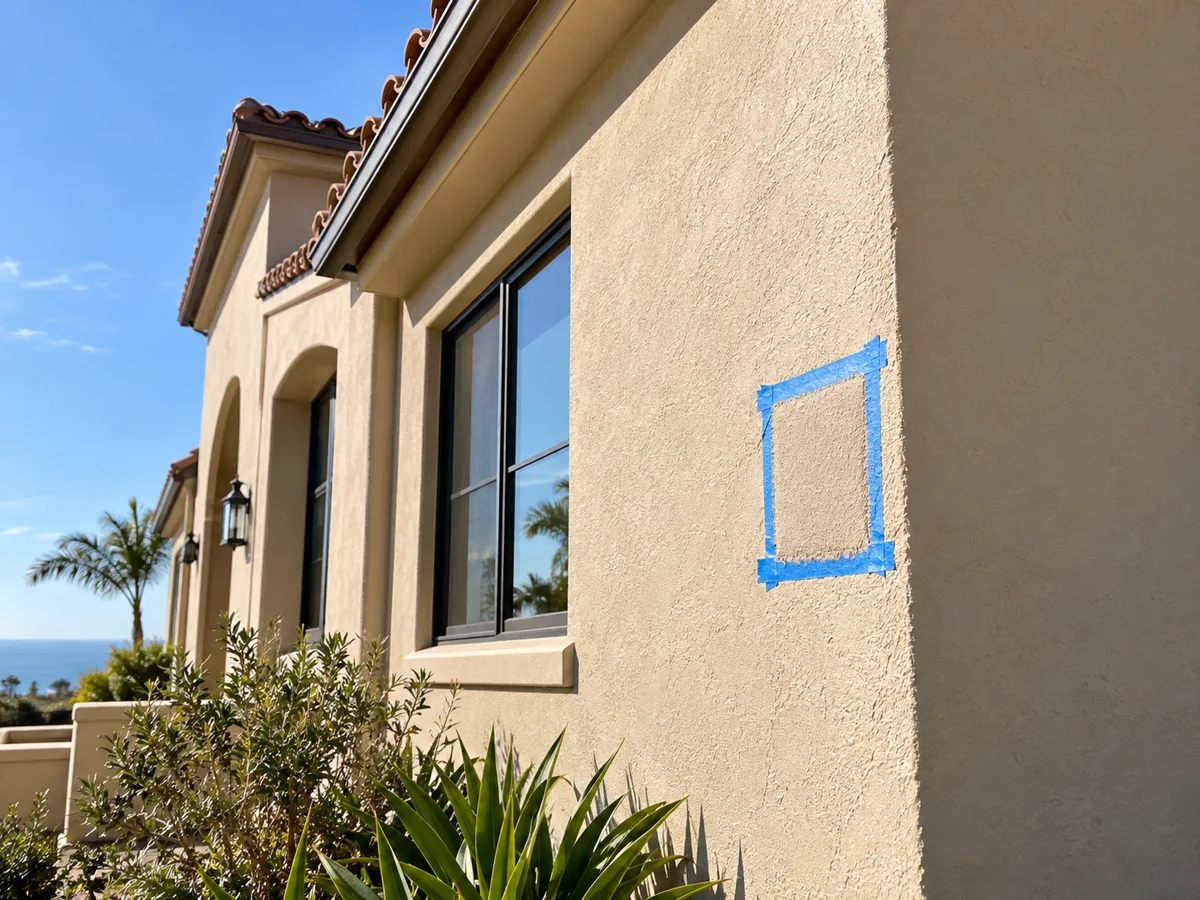
A sample panel on your own wall is approved before the full wall is coated, because limewash dries lighter than it looks wet and the color changes as it cures.
Mineral finishes are slower than paint, because each coat is thin and needs to dry and cure. The schedule reflects the number of coats and the weather, not just the wall area.
Most mineral coating jobs are typically spread across several days with drying time between coats, and the written schedule lists each stage.
Coastal air, morning moisture and strong afternoon sun shape how mineral coatings age in Torrance. Lime and silicate handle moisture well, but they respond to the weather in ways that are different from paint.
We are plain that a lime or silicate finish is a choice for a look and a wall, and we say when a different coating would serve the property better.
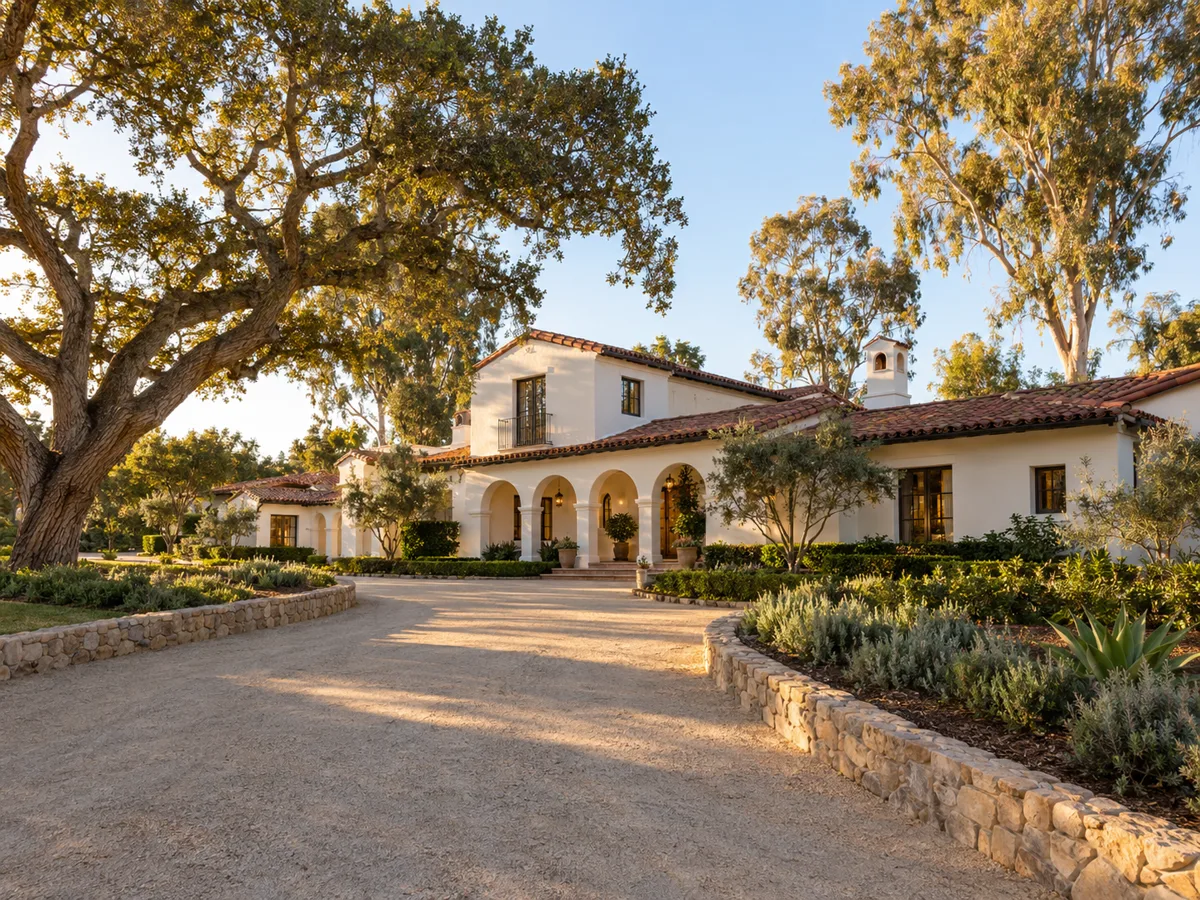
We apply limewash and mineral coatings to homes, garden walls and small buildings across Torrance, Palos Verdes, Rolling Hills Estates, Redondo Beach and the South Bay. Common jobs are stucco exteriors on Mediterranean and Spanish-style homes, brick fireplaces and chimneys, garden and courtyard walls, and interior feature walls.
Send photos of the wall, tell us whether it has been painted before, or book a walk. We test absorbency on the spot, show you samples and write a scope that names the product, the number of coats and the prep.
For polished, troweled interior finishes, a different service fits better, and we can talk through that on the same visit.
For a polished, burnished wall instead of a matte one, see Venetian plaster.
The process
Four steps, and nothing is painted until you have approved the scope and the colors.
We walk the house or property with you, look at the stucco, the trim and the old coating, and note what the sun, the salt air and the marine layer have done to each side.
You get the prep, the products, the colors and the dates in writing. For an association or a building, the scope is phased so residents and tenants know which day is theirs.
Washing, scraping, patching and caulking come first, because that is what the paint holds on to. Then primer where it is needed and the finish coats.
We walk it again with you before we call it done, and touch up anything you point at.
Also from our crews
Questions
It depends on the old coating. Limewash needs an absorbent surface, so a wall sealed with elastomeric or heavy acrylic usually needs the coating removed or a special primer, and we test it first.
It is soft, matte and slightly cloudy, with variation from the brush and the wall beneath. The color is lighter when dry and builds with each coat.
Silicate bonds chemically into the wall and is harder wearing and more color-stable, while limewash is softer and weathers more. Both are breathable, and we recommend one based on your wall and your look.
Silicate is very durable on suitable walls, and limewash is more of a maintained finish that can be refreshed. Exposure, wall condition and prep all affect how long either lasts.
Mineral coatings use mineral pigments, so the palette is more earth-toned than a paint line. We show samples on your wall, and the color shifts as it dries.
Wall area, texture, the number of coats and any old coating that must be removed. The written quote after the walk sets the price.
Lime is caustic while wet, so we protect plants, glass and floors and clean splashes at once. Once cured it is stable, and the finish has no film to off-gas.
Yes. We serve Torrance, Palos Verdes, Rolling Hills Estates, Redondo Beach, Manhattan Beach and the rest of the South Bay. Send your address and a photo of the wall.
Homeowners get a free on-site estimate. Boards, managers and contractors can send a scope for a bid.
Licensed, insured and bonded · License #585047. Calls only, we do not receive text messages.