Skip to content
Call (424) 435-0964Licensed, insured and bonded · License #585047

Commercial Building Exterior Painting in Torrance

Torrance Expert Painting handles commercial building exterior painting in Torrance, from strip-center facades to office elevations and tilt-up walls. We plan the access, the tenant schedule and the coating system before the first lift arrives.

  • Free on-site estimate
  • Written scope, coat by coat
  • Colors you approve first

Get a free painting estimate

About our commercial Building Exterior Painting

A commercial exterior repaint is a facade project first and a painting project second. We measure every elevation, name the coating for each substrate, and plan lifts, scaffold and tenant access so the building stays open while the walls change color.

We work for owners, property managers and asset managers across Torrance, Rancho Palos Verdes, Redondo Beach and the South Bay. When a wall needs a stucco, sealant or roofing trade before paint can hold, we say so on the first walk and put it in the scope.

Why Torrance Expert Painting

How We Work

No salesperson hands you to a stranger. The person who measures the job answers for it.

Written scopePrep, primer and finish coats listed surface by surface
Colors firstSamples on your wall, and association submittals prepared for review
One crewThe crew that quotes the job is the crew that paints it
CA License #585047Licensed, insured and bonded

What a Torrance building exterior is made of

The substrate decides the primer, the coating and the way we reach the wall. Commercial buildings in Torrance mix several of these on one elevation, so each gets its own line in the scope.

Stucco and plaster facades

Cement stucco is the most common skin on Torrance retail and office buildings. It is checked for cracks and hollow spots, patched to match the existing texture, and coated with a system that lets vapor out while keeping rain from getting in.

Tilt-up and precast concrete

Large concrete panels show form lines, hairline cracks and joint sealant that has aged. Panel joints are recaulked first, bug holes and spalls are filled, and a masonry primer goes down before a coating that bridges small movement.

Metal, trim and storefront

Parapet caps, fascia, canopies, rolling doors and storefront framing take a rust-inhibiting primer on any bare or flash-rusted metal, then an enamel that holds color in strong sun and salty air.

Block walls and screen walls

Trash enclosures, perimeter walls and mechanical screens are painted with a block filler where the surface is open and porous, so the finish does not drink the first coat and show bare patches.

The building envelope comes before the color

A facade repaint protects the building first and changes its look second, so the walk starts with the condition of the envelope. Paint is the outer layer of a system made of stucco, sealant, flashing and drainage, and it only lasts as long as the layers behind it do.

On the walk we look for the problems that shorten a coating's life, and we write each one down with its location on the elevation.

  • Failed sealant: cracked or pulled-away joints around windows, panel seams and expansion joints let water behind the wall, and new paint over them fails early.
  • Chalking and fading: a chalky film means the old coating has broken down, and it has to be washed or primed so the new coat can bond.
  • Hollow or cracked stucco: tapping the wall finds areas that have lost their bond to the lath, and those go to a stucco repair before painting.
  • Water sources: a roof drain that dumps on a wall or a sprinkler that hits the base will stain any new finish, so we flag it for the owner.

You get a written scope by elevation, so a property manager can compare it to other bids line by line and see exactly what is included on the north wall and what is not.

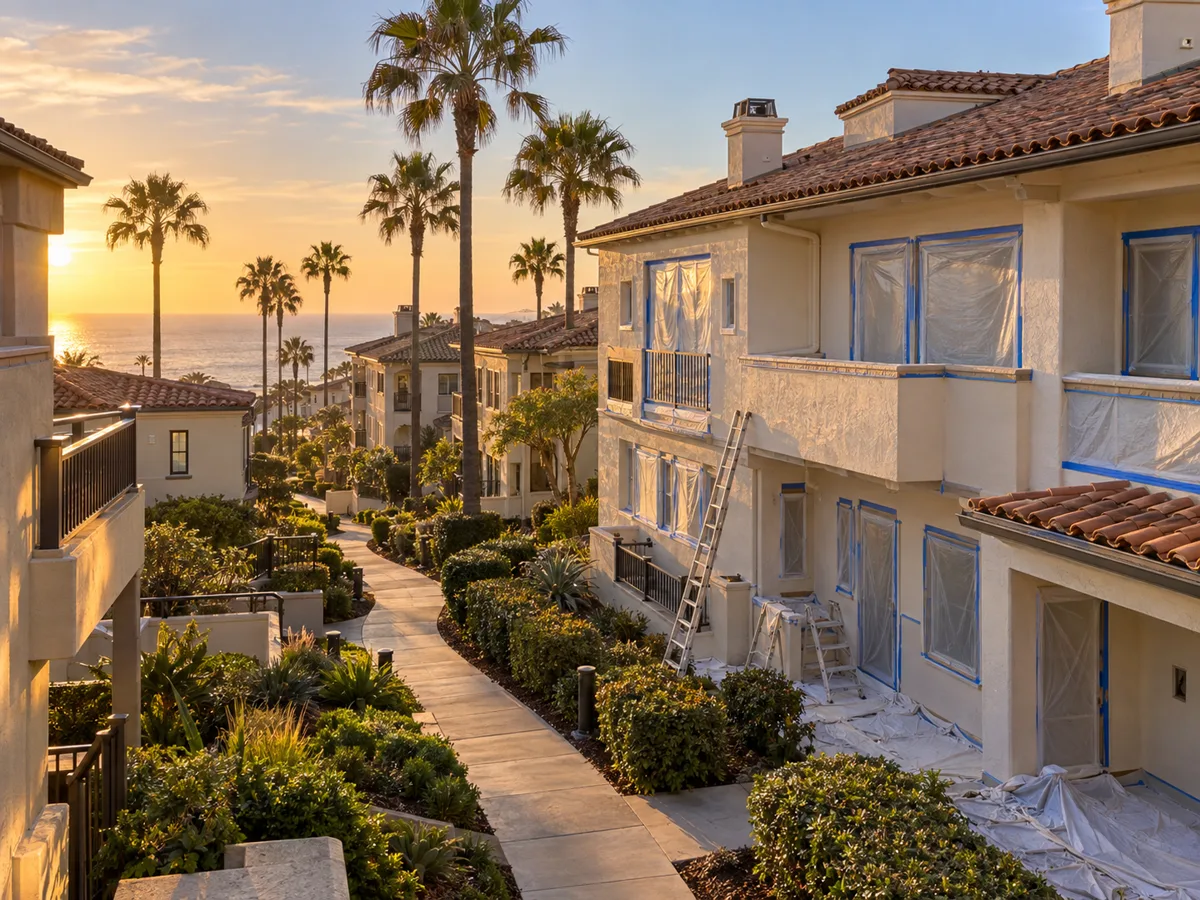
Low-rise resort building with arched balconies and a tile roof, a yellow scissor lift parked at the wall and part of the upper wall repainted cream beside terracotta.

How we prepare and paint a commercial facade

Prep decides how long a commercial exterior lasts, so it takes most of the schedule and gets the most detail in the scope. The order below is the order the crew works in.

  • Pressure wash: every elevation is washed to remove dirt, chalk, mildew and loose coating, with water directed away from doors, vents and tenant spaces.
  • Repair: cracks are routed and filled, spalls and bug holes are patched, and stucco patches are textured to match the surrounding wall.
  • Sealant: failed joints are cut out and replaced with a sealant rated for movement and compatible with the coating that goes over it.
  • Prime: bare stucco, patches and metal get the primer named in the scope, and chalky areas get a bonding primer before color goes on.
  • Coat: two finish coats are applied by spray and back-roll on textured walls so the paint is worked into the surface, with brush work on trim and edges.
  • Detail: signage, light fixtures, windows and storefront glass are masked and cleaned, and the site is swept at the end of every shift.

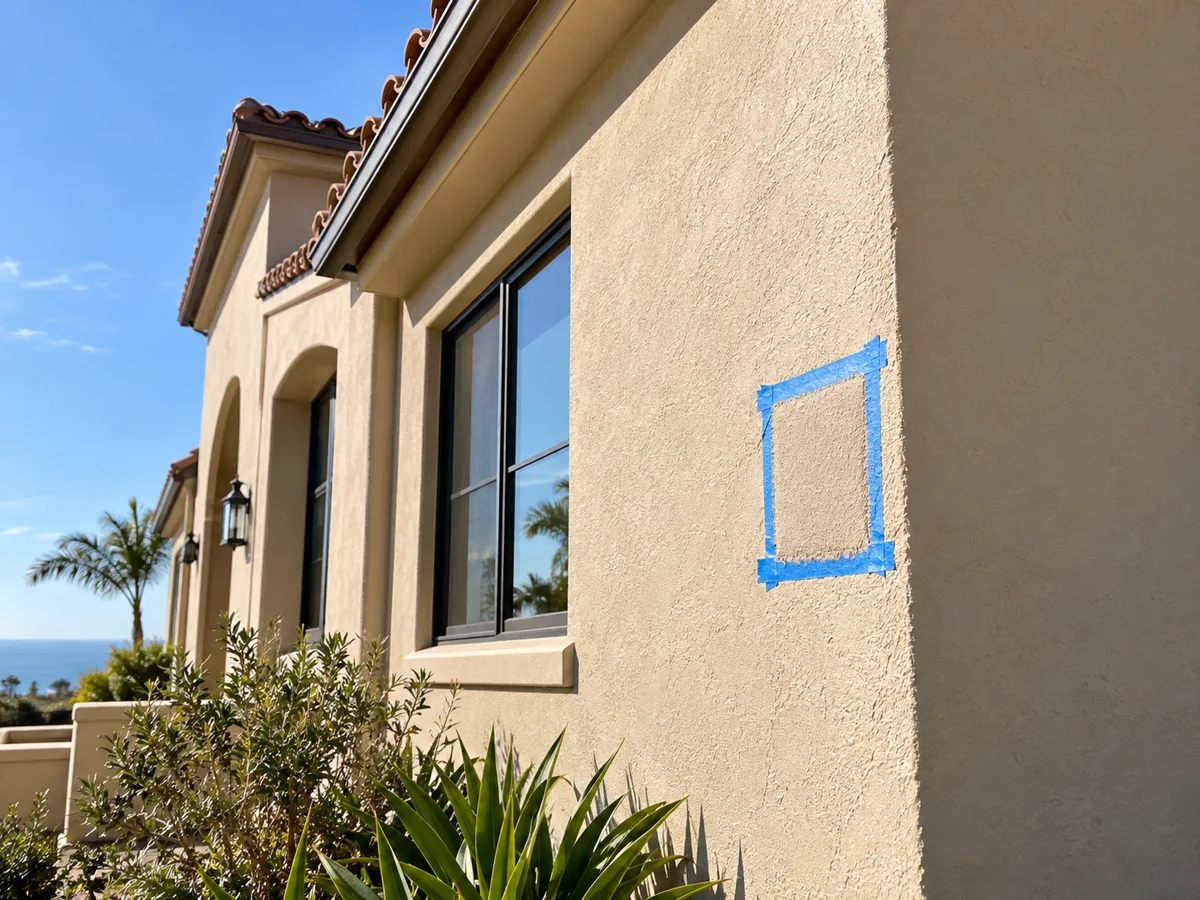
Color is approved on a test area of the actual wall before the full elevation is coated, because a color chip under office lighting looks different on a sunlit stucco wall at noon.

What shapes the scope and the schedule

Height and access set the schedule more than square footage does, because every lift move and scaffold tower takes time. A single-story strip center and a four-story office building with the same wall area are two very different jobs.

  • Building height: one-story walls are reached from the ground or a ladder, while taller elevations need a boom lift, a scissor lift or swing-stage scaffold.
  • Elevation count and condition: a building that has not been recoated needs more prep than one with a sound existing coating.
  • Tenant operations: work near entrances, loading doors and patios is phased so each tenant knows which day their frontage is closed.
  • Parking and fire lanes: lift placement has to leave fire access clear, and sections of parking are coned off in agreed windows.
  • Coating system: an elastomeric or high-build coating takes longer to cure between coats than a standard acrylic.
  • Weather: coating makers set minimum temperatures and require dry surfaces, so rain and heavy fog can move a day.

Most facade repaints of this kind are typically scheduled in phases over several weeks, and the written schedule gives you the order of elevations and the tenant-impact days up front.

Local conditions that change the job in Torrance

Torrance buildings sit a few miles from the ocean, so the marine layer, salt in the air and strong afternoon sun all wear on a facade. The marine layer keeps morning surfaces damp well into the day through May and June, and we do not coat a wall that is still wet.

  • Morning moisture: a wall that looks dry at eight can still hold dew in the stucco texture, so spray work on shaded elevations starts later in the day.
  • Salt and mildew: north and shaded walls grow mildew, which is killed and washed off before priming, or it grows through the new coat.
  • Afternoon sun: south and west walls take hard UV, so a fade-resistant pigment and a quality topcoat matter most there.
  • Mixed construction: the corridors along Hawthorne Boulevard and Torrance Boulevard hold decades of additions, so one building often has several stucco textures and ages of paint on the same wall.
  • Older downtown walls: in Old Torrance, brick and plaster buildings need breathable coatings and gentle cleaning, not a heavy film on a wall that has to release moisture.

These are the details that separate a repaint that looks good for a season from one that holds its color and edge for years.

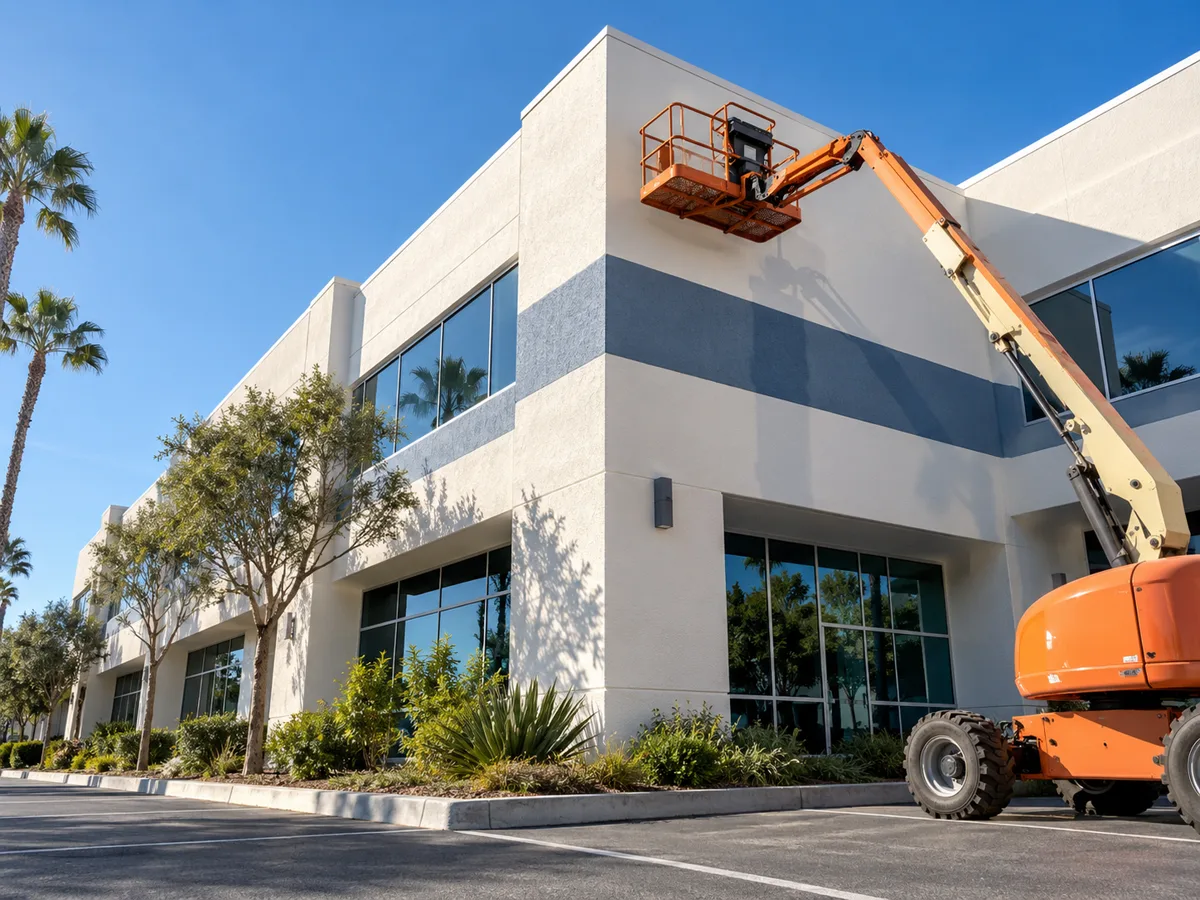
Two-story white stucco office building with a slate-blue horizontal band and tall glass windows, an orange boom lift raised against the wall beside a landscaped planter and parking lot, palms against a clear blue sky.

Commercial exteriors across Torrance and the South Bay

We repaint building exteriors for owners and managers across Torrance and the nearby South Bay communities, from small retail frontages to multi-tenant office buildings. The work covers shopping center facades, medical and professional office buildings, restaurant exteriors, storage and light industrial buildings, and mixed-use properties.

The walk is free and it is the start of a written scope you can hand to a board, a lender or an asset manager. Send photos of each elevation and the building address, or tell us when a manager can meet us on site, and we will measure, note the access and return a scope by elevation.

For inside work on the same property, such as tenant suites and common areas, we can schedule it in the same visit so the building is only disrupted once.

Block and brick walls on commercial buildings are covered under masonry painting.

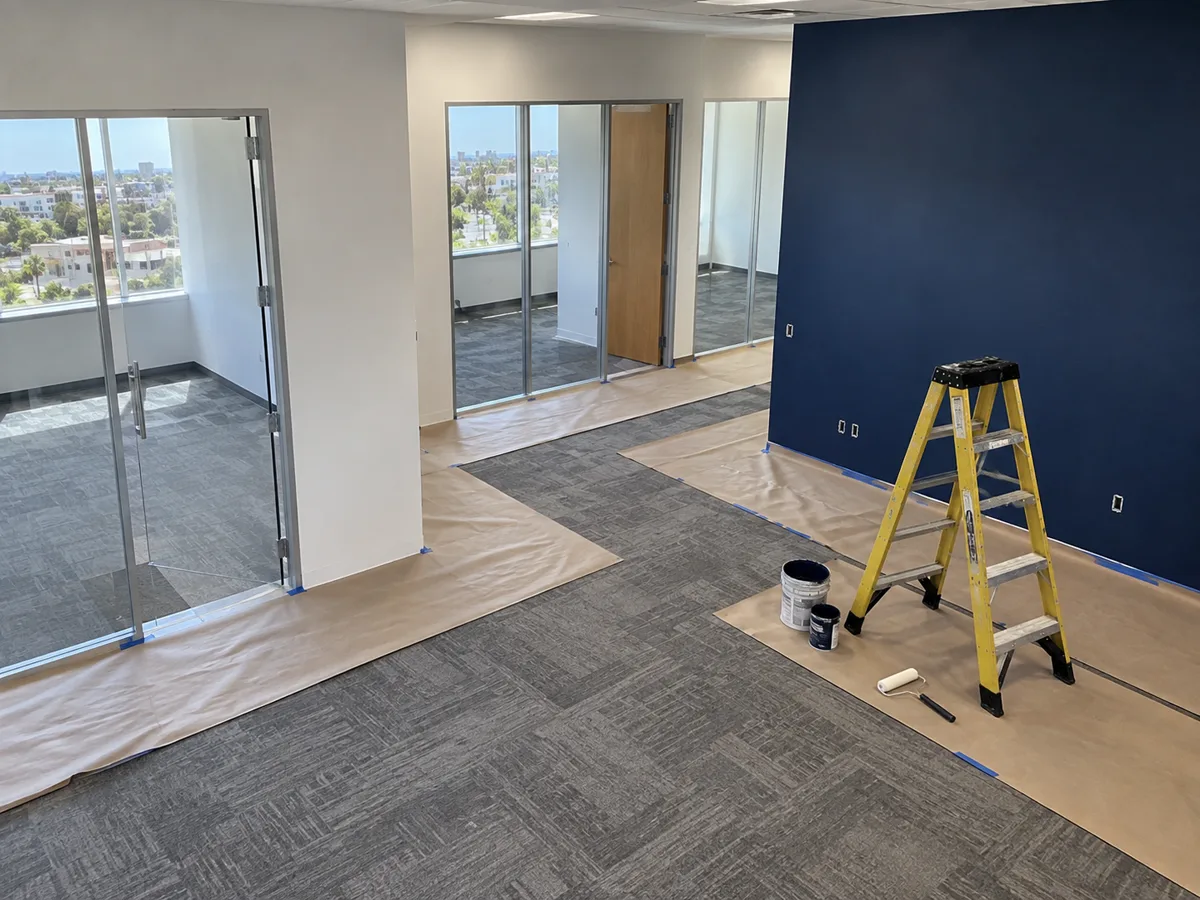
Office suite with fresh white walls and a deep navy accent wall, glass-fronted offices, carpet tiles covered with masking paper, a yellow stepladder, paint cans and a roller.

Colors and Finishes

The process

How a Painting Job Runs

Four steps, and nothing is painted until you have approved the scope and the colors.

  1. The walk

    We walk the house or property with you, look at the stucco, the trim and the old coating, and note what the sun, the salt air and the marine layer have done to each side.

  2. The written scope

    You get the prep, the products, the colors and the dates in writing. For an association or a building, the scope is phased so residents and tenants know which day is theirs.

  3. Prep, then paint

    Washing, scraping, patching and caulking come first, because that is what the paint holds on to. Then primer where it is needed and the finish coats.

  4. The final walk

    We walk it again with you before we call it done, and touch up anything you point at.

Questions

Commercial Building Exterior Painting: Common Questions

Can you paint the exterior while the building stays open?

Yes. We phase the work by elevation and entrance, post the dates for each tenant and keep a clear path to every door. A busy frontage is typically painted in early morning or evening windows.

What drives the price of a commercial exterior repaint?

Wall area, building height and how the crew reaches it are the biggest drivers, followed by prep, sealant work and the coating system. The written quote after the walk sets the price, and it is itemized by elevation.

How do you reach tall walls?

We use boom lifts, scissor lifts or scaffold depending on the wall and the ground around it. Lift placement is planned around parking, fire lanes and tenant access before work starts.

Do you repair stucco and seal joints before painting?

Yes, small repairs and sealant replacement are part of the prep and listed in the scope. Large areas of failed stucco or structural cracks go to a stucco contractor first, and we tell you that on the walk.

How long does a commercial exterior repaint take?

Most single buildings are typically completed in a few weeks, and larger centers take longer in phases. The written schedule lists the order of elevations and any days that affect tenants.

Will paint hold up near the coast?

A properly washed, primed and coated wall holds well in Torrance's coastal air. We choose products rated for sun and moisture and tell you which elevations need the most protection.

Can you match the existing color or change it?

Both. We can match an existing color from the wall itself or apply a new scheme, and a test area on the actual building is approved before the full wall is coated.

Do you work with property managers and HOA boards?

Yes. We supply scopes, schedules, color submittals and tenant notices in a form managers and boards can circulate, and we serve properties across Torrance and the South Bay.

Free on-site estimate

Talk to us about commercial building exterior painting

Homeowners get a free on-site estimate. Boards, managers and contractors can send a scope for a bid.

Call (424) 435-0964

Licensed, insured and bonded · License #585047. Calls only, we do not receive text messages.

Call (424) 435-0964Licensed, insured and bonded · License #585047